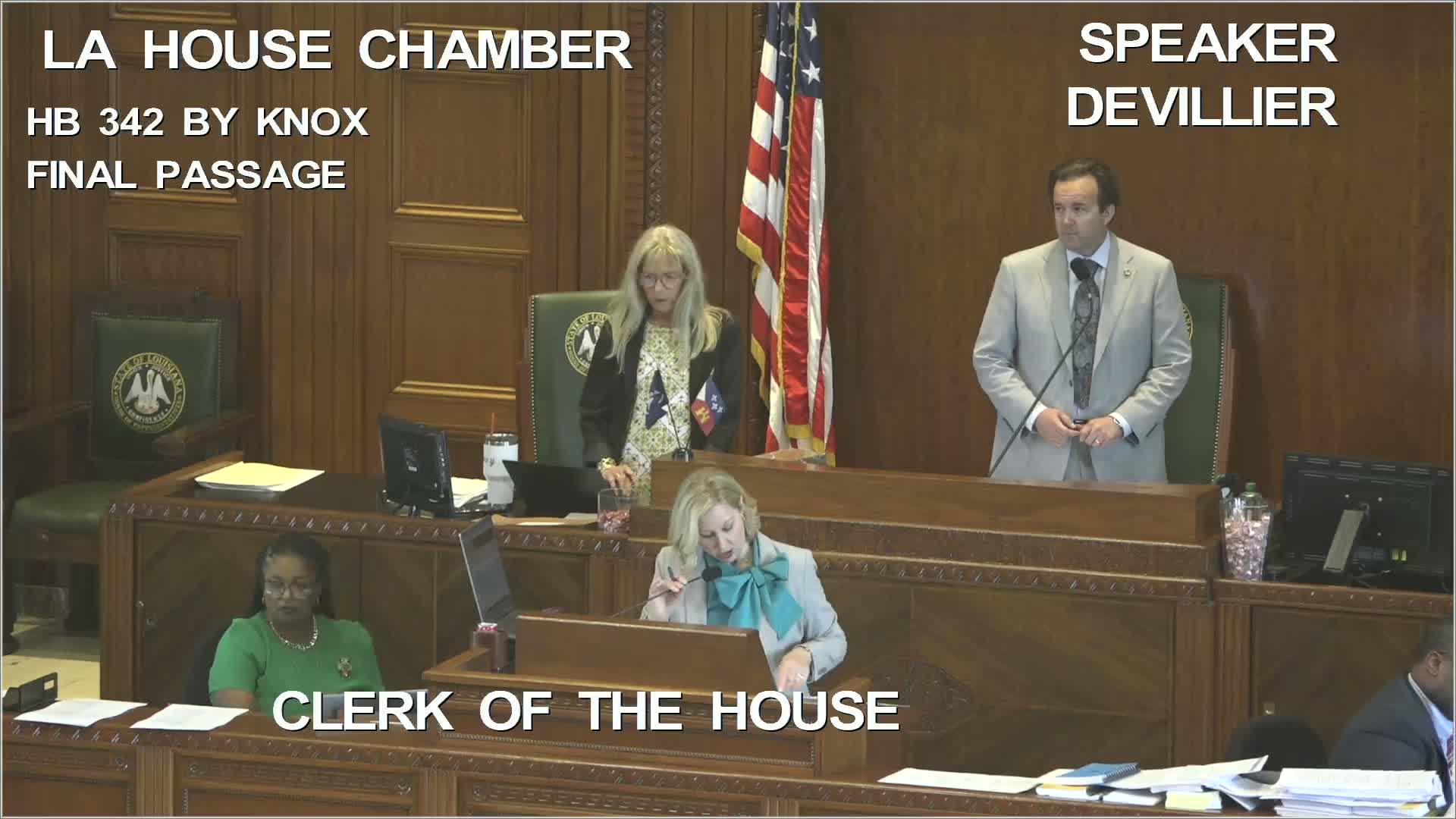
House advances special-education bill shifting burden of proof to school systems
Loading...
Summary
Lawmakers passed HB 3 42 on final passage, a measure that shifts the burden of proof in special-education due-process hearings from parents to local education agencies, aiming to increase accountability for services to students with disabilities.
The Louisiana House passed HB 3 42 on April 14, a bill that changes the due-process burden in special-education disputes so school systems must demonstrate they provided appropriate services to students with disabilities.
Representative Knox, the bill’s sponsor, told the House that the measure is designed to level the playing field for families who often lack the financial resources to pursue protracted disputes. "Parents who are often working full time…should not carry the burden when a child with a disability is not receiving the services they are entitled to under the law," Knox said, arguing the schools maintain records and are better positioned to show the services were provided.
Members adopted technical and acknowledgement amendments recognizing families and advocacy work that informed the bill. Supporters said the change does not create new mandates or expand eligibility but instead requires school systems to show they met students’ needs in disputes. Representative Edmondson called the measure "a monumental bill for children with special needs and their parents."
The amendment was adopted without objection, and the House recorded the final passage vote at 98 yeas and 3 nays. Sponsors said the bill intends to promote accountability while limiting litigation incentives; opponents were few on the floor during final passage.
The bill will proceed to the Senate for consideration. Sponsors said implementation will rely on existing administrative processes for due-process hearings.