Lifetime Citizen Portal Access — AI Briefings, Alerts & Unlimited Follows
House adopts 'Jacob Carter Dignity and Death Act' to ban filming of deceased at crime scenes
Loading...
Summary
The Louisiana House passed HB 2 65, the "Jacob Carter Dignity and Death Act," after lawmakers recounted a family’s account that a reality TV crew filmed at a murder scene. The bill criminalizes intentional observing or photographing of a deceased person’s body and applies exceptions for law enforcement.
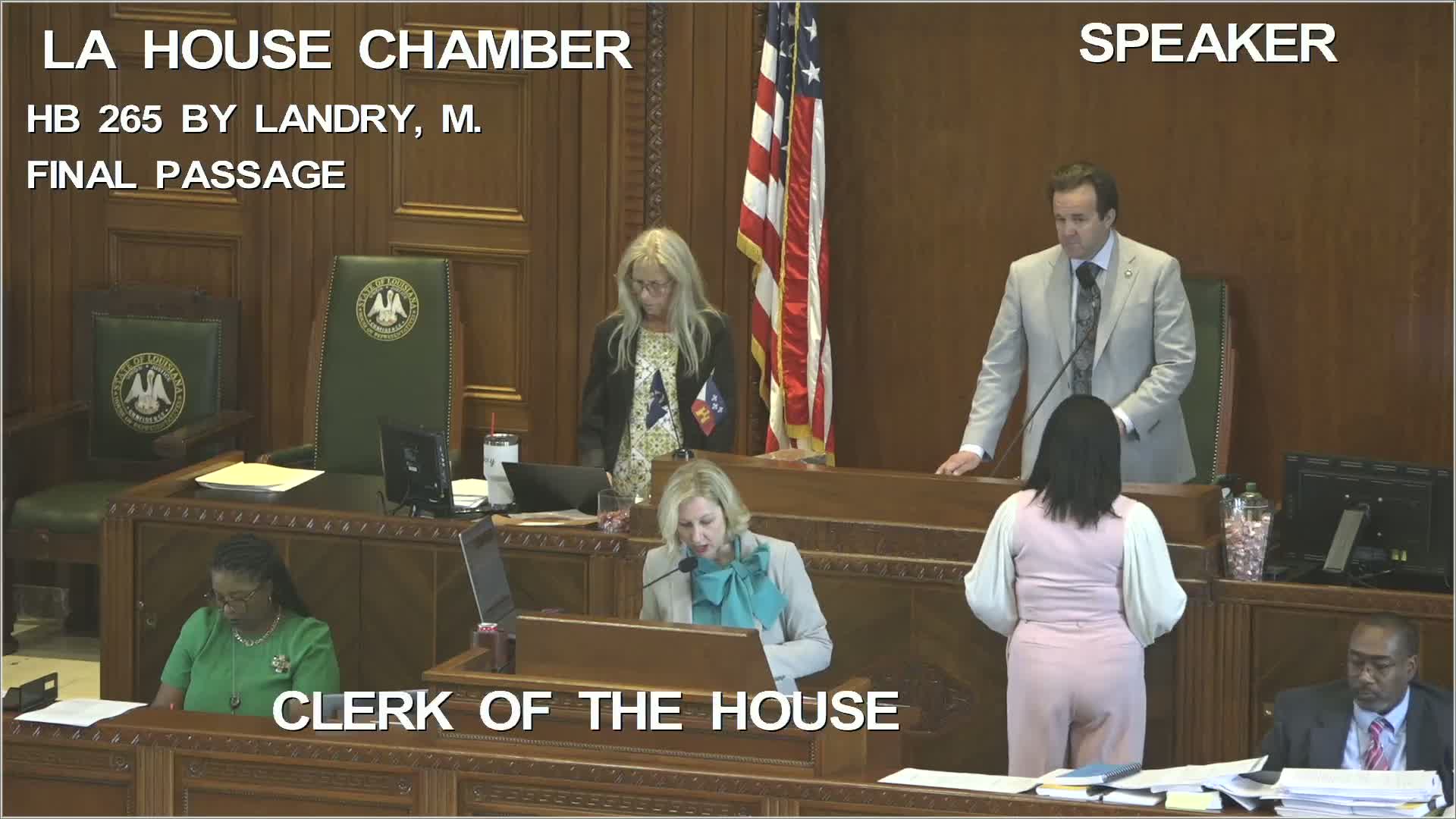
The Louisiana House of Representatives on April 14 passed HB 2 65, called the Jacob Carter Dignity and Death Act, making it a crime for individuals — outside of law enforcement — to intentionally view, photograph or record the body of a deceased person at a crime scene.
Representative Mandy Landry, the bill’s author, told colleagues the legislation was prompted by a family’s discovery that a true-crime reality television crew had been allowed into a live crime scene and filmed within feet of their son’s body. "They learned that Jacob was denied dignity even after his death," Landry said, describing how the family discovered a municipal contract allowed filming and left the relatives with no legal recourse. She asked members to consider the family’s memorial book and said the bill would "codify basic decency" and create protections for victims’ families.
Lawmakers adopted a floor amendment that explicitly named the act for Jacob Carter and clarified law-enforcement exceptions. Representative Cruz asked whether the prohibition covered unintentional or incidental recordings — such as drone mapping images — and Landry said the statute is written to target intentional acts "for the purpose of observing, viewing, photographing the body of a deceased person," and that routine law-enforcement evidence gathering is excluded.
Floor debate was brief after the emotional invocation of family testimony; the amendment was adopted without objection and the bill passed on final passage by a recorded vote. The clerk announced 95 yeas and 0 nays on the final vote.
The measure moves to the Senate for consideration; the House made the bill effective immediately upon passage through its adopted amendment.
The House returned to other business after passage and continued its calendar of bills.