Get Full Government Meeting Transcripts, Videos, & Alerts Forever!
Get email alerts on the Sb 275 Transparency topic
No spam. Unsubscribe anytime.
Public commenters urge stronger transparency and fiscal guardrails for Alaska LNG bill (SB 275)
Summary
Public witnesses, environmental groups and ratepayer advocates told the Senate Resources Committee the legislature needs stronger transparency and cost disclosures for the Alaska LNG project; speakers warned of wide-ranging cost estimates, potential taxpayer exposure and the need for decommissioning plans before approving large property‑tax subsidies.
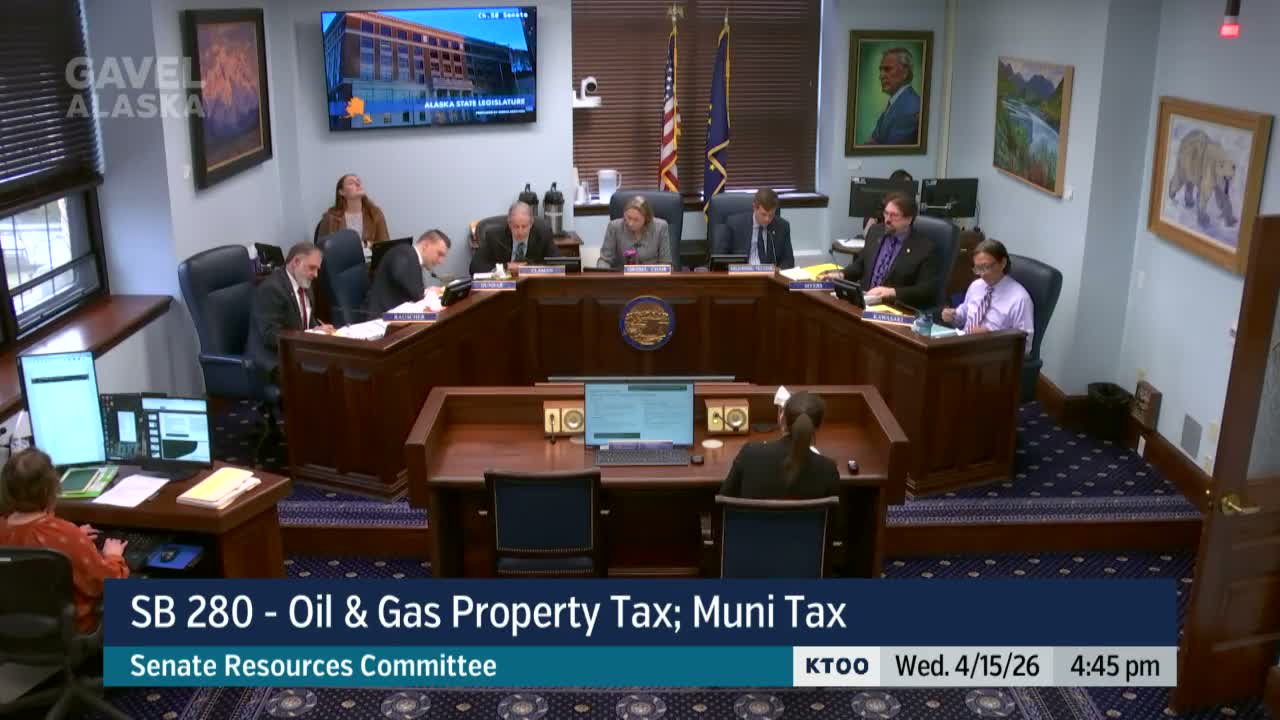
A string of public commenters told the Alaska Senate Resources Committee on April 15 that Senate Bill 275’s transparency and fiscal‑guardrail provisions are necessary because the developer and state agencies have not provided robust, current cost and governance information for the proposed Alaska LNG project.
Brian Kasoff, regulatory analyst with the Alaska Public Interest Research Group, said written disclosure and clearer governance safeguards are essential because the developer (Glenfarn) “has no proven track record” on bringing an LNG export project to FID and has not shared the calculations underlying claims of competitiveness. Kasoff urged the committee to require project governance and economic information before approving large tax changes.
Environmental and citizen witnesses made similar points. Sean McDermott (Fairbanks Climate Action Coalition) said the committee has heard widely divergent cost figures — AGDC’s $44–46 billion, a consultant’s $57 billion and independent estimates up to $70 billion — and that lack of transparency prevents legislators from assessing whether Alaskans would effectively be subsidizing the project. He also urged a funded plan for removal and restoration (decommissioning) costs.
Other callers (Maddie Halloran, Doug Woodby of 350 Juneau, Ben Boettcher of Cook Inletkeeper) expressed concern that the project’s timeline and cost estimates are evolving, that press releases may overstate certainty ahead of FEED/FID, and that public dollars should not be diverted without clearer evidence of net benefit to Alaskans.
Direct quotes: Kasoff said the Alaska Public Interest Research Group “strongly supports the transparency and fiscal accountability provisions of SB 275.” McDermott asked, “How can I possibly ask Alaskans to subsidize the project through property tax cuts worth billions before the true cost of those cuts are known?”
What the committee will do next: Chair Giesel closed public testimony and said the committee will continue sessions with the consultant presentations and take further public testimony as the bills remain open; the committee scheduled continuation for the following morning at 9 a.m.
What remains unresolved: Witnesses requested up‑to‑date project cost estimates, OBEM‑style economic modeling that reflects realistic capital assumptions, decommissioning cost plans, and clearer delineation of which municipal and state taxes would be affected under proposed legislation.