Get Full Government Meeting Transcripts, Videos, & Alerts Forever!
Get email alerts on the Opioid Settlement Fund topic
No spam. Unsubscribe anytime.
Committee advances bill to create opioid settlement fund amid questions on tracking and oversight
Summary
The House Health and Social Services Committee advanced House Bill 344 to establish an opioid settlement fund after questioning how settlement dollars are tracked, whether non‑settlement monies could be deposited into the subfund, and how audit recommendations will be implemented. Department and law officials said settlement agreements and a settlement administrator constrain spending.
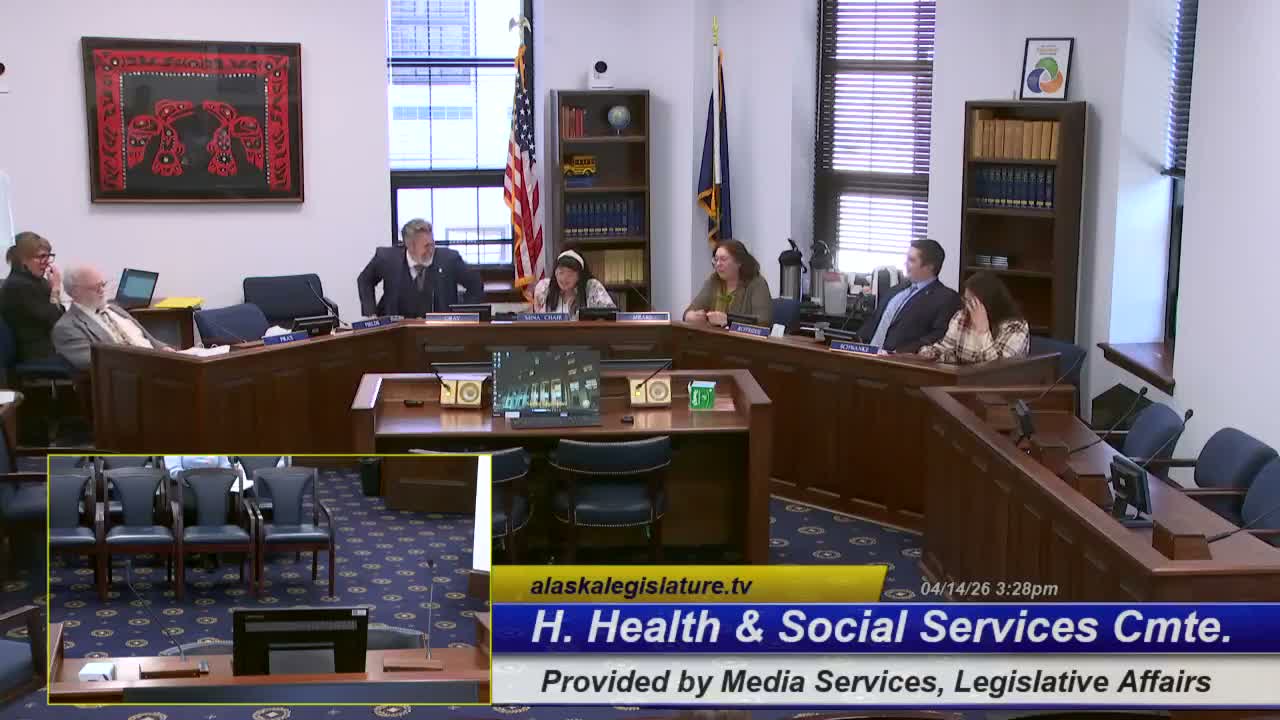
Representative Julie Colombe’s proposal to establish an opioid settlement fund (House Bill 344) moved out of the House Health and Social Services Committee on April 14, 2026, after lawmakers pressed state officials about accounting, oversight and the permissible uses of settlement dollars.
Why it matters: The bill would create a special subfund to hold opioid settlement receipts to make money flows more visible in state financial statements. Lawmakers said the change is intended to improve transparency after the legislative audit found problems recording settlement receipts and expenditures.
What lawmakers asked and what officials said Representative Gray asked what the subfund could pay for and what it could not. Rep. Julie Colombe (sponsor) deferred to the Department of Health. Lindsay Cotto, director of the Division of Public Health, told the committee that "it does include core strategies like treatment and recovery services, prevention programs, support for affected families, data collection and monitoring," and that settlement money "can't be used for supplanting existing dollars." Cotto also described a settlement steering committee that provides recommendations to the Department of Health on funding priorities.
Auditor’s findings and the rationale for a separate fund Chris Curtis, the legislative auditor, told the committee his review found that settlement receipts were often mixed into the general fund and that inconsistent department coding produced errors in the draft financial statements for FY24 and FY25. "The monies were being basically deposited into the general fund without any unique accounting structures," Curtis said, adding that a separate fund with a unique fund code and division of finance procedures would make receipts and expenditures easier to track and reduce audit adjustments.
Concerns about non‑settlement monies and legal limits Committee members including Representative Prox pressed whether putting other, non‑settlement monies into the subfund would allow the legislature to reallocate those dollars. Emily Durvey, staff to Representative Colombe, acknowledged the bill would allow monies outside the settlement receipts to be allocated into the subfund and that such monies would not be bound by the settlement agreements and therefore could be reallocated by the legislature. Deputy Attorney General Corey Mills said the settlement agreements themselves use the phrase "future opioid remediation" and include examples of allowable uses, and noted there is also a settlement administrator and reporting requirements that inform allowable spending.
Vote and next steps A committee member moved to report HB 344 from committee with individual recommendations and attached fiscal notes; Chair Mina announced no objection and said the bill "passes from committee." Committee members were asked to remain briefly after adjournment to sign the committee report. The bill will proceed according to the committee’s recommendation.
What the committee record does not show No public testimony was offered in person or online during the hearing, and the committee did not record a roll‑call vote; Chair Mina stated the bill passed after no objection was raised. The committee did not specify a final appropriation amount in the hearing record.
Context and background Committee discussion referenced Exhibit E of the final opioid settlement agreements as the list of approved uses. Committee members compared the proposal to other special revenue arrangements such as the Exxon Valdez settlement fund when discussing statutory language and safeguards.
Closing note The committee set the next Health and Social Services meeting for Thursday, April 16 at 3:15 p.m.