Lifetime Citizen Portal Access — AI Briefings, Alerts & Unlimited Follows
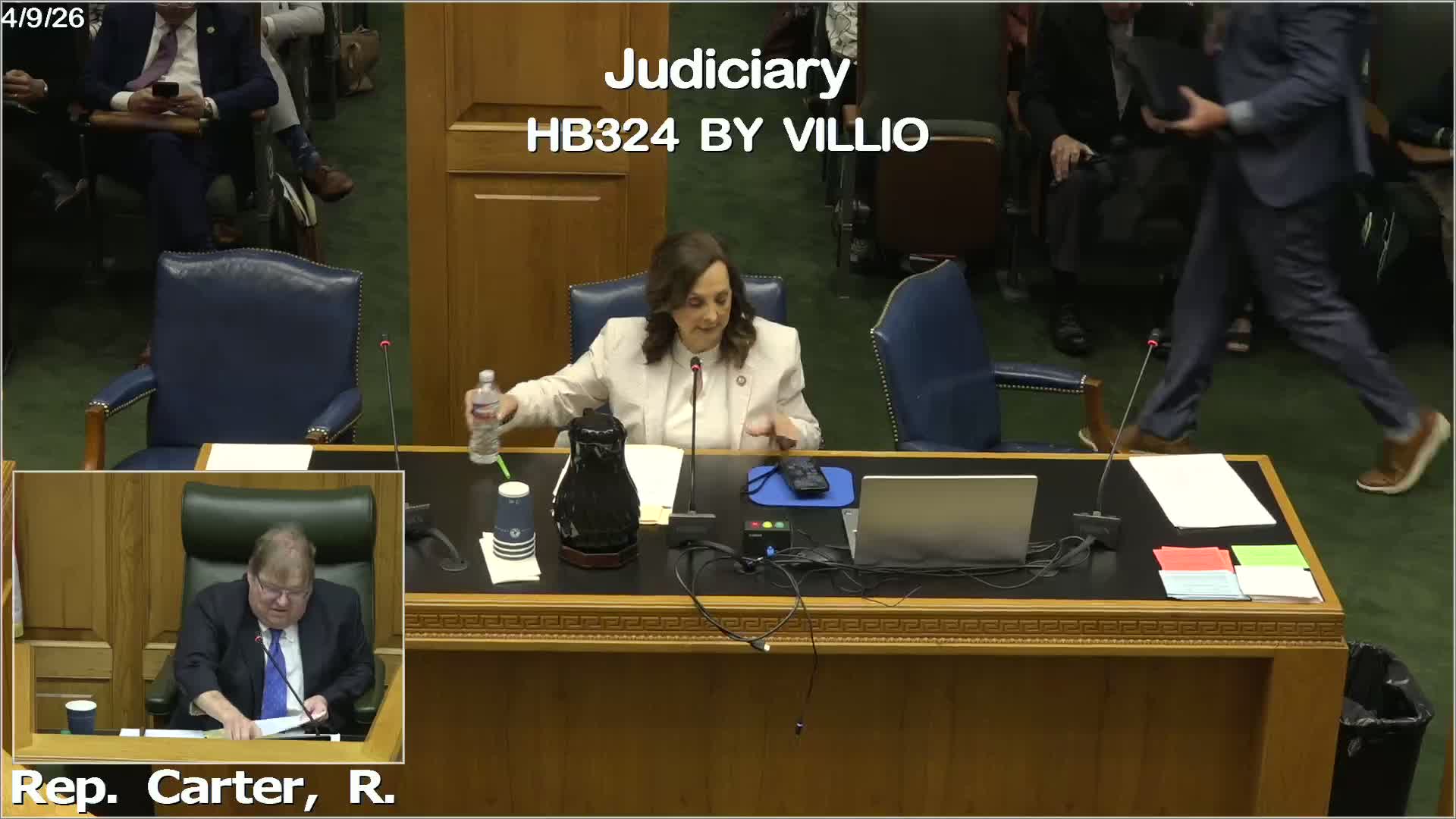
Committee advances 'Streets to Success' homelessness court bill after extended testimony
Loading...
Summary
A House committee voted 12–4 to move HB 2 11, the "Streets to Success" homelessness court bill, to the House floor after hours of debate and testimony from service providers, legal advocates and people with lived experience. Supporters said the bill creates specialized courts and local tools; opponents warned it criminalizes homelessness.
Representative Jennifer Villio, the bill’s author, asked the committee to advance House Bill 2 11 — which she and supporters have named the Streets to Success Act — after explaining it would create a permissive specialty-court model for jurisdictions that choose to use it to address chronic homelessness.
Villio told the committee the legislation “prioritizes and balances accountability, compassion, fiscal responsibility and the long‑term well‑being of individuals, families, and neighborhoods,” and described the proposal as an integration of criminal justice, housing and healthcare systems into a continuum of care. “This legislation reframes treatment not as a social service, but a core public safety infrastructure,” Villio said.
The bill, introduced as a governor’s package measure, includes provisions authorizing designated spaces for unsheltered people, tools for local governments to adopt minimum standards for those spaces and a homelessness‑court diversion program that can funnel eligible people toward treatment and supportive services instead of incarceration. Villio and a representative from the governor’s office said local jurisdictions would retain discretion to adopt the program.
Opponents — including housing advocates, civil‑rights organizations and providers with lived experience of homelessness — urged the committee to reject the bill or substantially rewrite it. Monique Blossom of the Louisiana Fair Housing Action Center told lawmakers, “Becoming unhoused due to falling on hard times, facing financial insecurity, or being housing‑insecure because you’ve been discriminated against is not a crime,” and warned that criminal records could bar people from housing opportunities.
David Wheaton of the NAACP Legal Defense Fund testified that HB 2 11 would create “the crime of unauthorized camping on public property,” and said that criminalization would deepen racial disparities and increase costs to local systems. Service providers such as Odyssey House and other treatment organizations said mandatory or court‑ordered treatment can help some people, but those witnesses emphasized the lack of treatment capacity and stable housing funding needed to support a diversion strategy.
Panelists and public commenters raised several specific concerns that committee members pressed the author to clarify: what triggers entry to the homelessness court (unauthorized camping or an underlying charge), whether designated sites would be required or merely permitted, the availability of shelter and treatment beds, and how expungement or record‑sealing would operate if charges are dismissed as part of the program. Villio said some offenses could serve as a gateway into the program, that offenses could be dismissed and expunged in many cases, and that the program is permissive for localities.
The committee adopted amendments that removed an enforcement provision that would have authorized a private civil action against a political subdivision for failing to clear encampments and that clarified LDH rulemaking authority for licensed group homes. An enactment clause linked certain sections to the governor’s signature and set section 3 to take effect on 2027‑01‑01.
After the amendment debate and hours of public testimony, Representative Edmonson moved to report the bill favorably as amended. Representative Jordan objected to moving it forward from committee. The clerk called the roll; the committee recorded 12 yeas and 4 nays and voted to advance HB 2 11 to the House floor.
What’s next: The bill, as amended in committee, will go to the House calendar for further consideration. The author and committee members said additional details — including funding, the scope of expungement and interactions with state agencies — are likely to be addressed on the floor and in appropriations work.