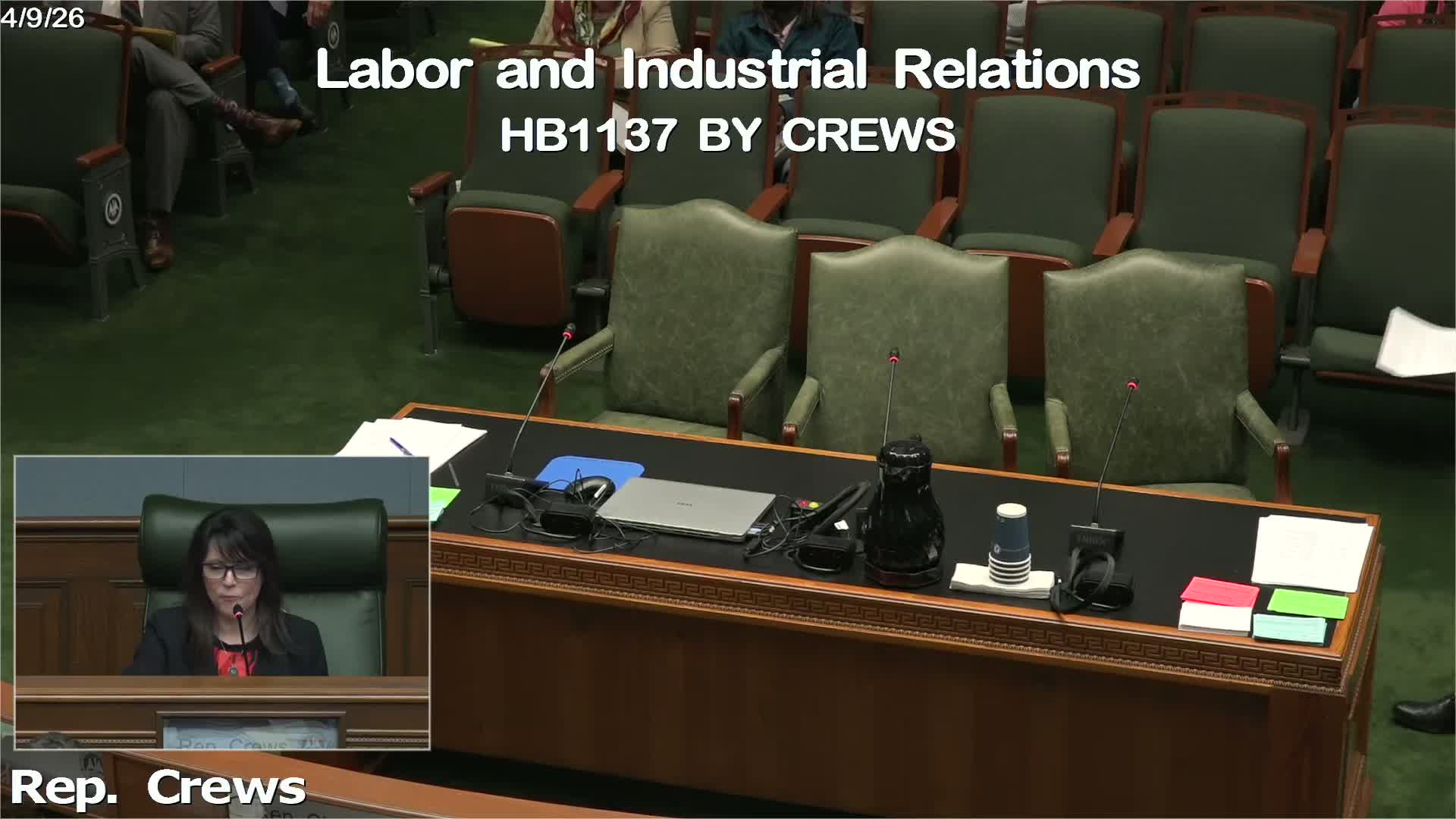
Committee approves Cruz bill barring firing over pronoun use, prompting civil-rights pushback
Loading...
Summary
The committee approved HB1137, which would prohibit terminating or retaliating against an employee "for misuse of pronouns." Supporters framed the measure as protecting free speech and religious liberty; civil-rights groups and business organizations warned it is vague and could conflict with federal anti-harassment law.
Chairman Cruz introduced House Bill 11 37 as a narrow employment-protection measure intended to prevent employers from firing or retaliating against workers "for misuse of pronouns." In his presentation the chairman described the bill as protecting free-speech and religious-liberty concerns and said "this bill simply says that employers cannot punish dissenters."
Opponents urged the committee to defer or reject the measure. Tia Fields of Workplace Justice Project warned the bill's undefined term "misuse" would "leave employers and HR professionals without clear guidance" and said repeated or deliberate misgendering can contribute to a hostile work environment under federal law. Peyton Rose Michelle of Louisiana Trans Advocates testified that the measure "is impolite" and risks harming a small and vulnerable population; Melissa Flournoy called the bill "unnecessary" and said it codifies mean-spirited behavior.
Representative Glorioso and others asked whether the bill could leave employers between conflicting state and federal responsibilities, such as addressing harassment claims; Glorioso pointed to the need for clearer definitions and potential conflicts with Title VII obligations. Several committee members raised concerns about the bill's scope and whether it would force employers to tolerate intentional harassment. The author said he would work to clarify definitions if needed; nevertheless, the committee recorded a vote and reported HB1137 favorably on a 6-4 vote.
What happens next: HB1137 was reported out of committee on a recorded vote (6-4). Opponents asked for deferral and urged the author to consider narrower language and definitions to prevent conflicts with existing federal workplace protections.