Lifetime Citizen Portal Access — AI Briefings, Alerts & Unlimited Follows
Committee advances bill to strengthen penalties for drug use in school zones amid concerns about overcriminalization
Loading...
Summary
HB 568 would increase penalties for visible drug use (including smoking/vaping) within school zones to enable enforcement; the measure drew support from law‑enforcement representatives and objections from civil‑liberties groups over felony-level penalties and enforcement practicality.
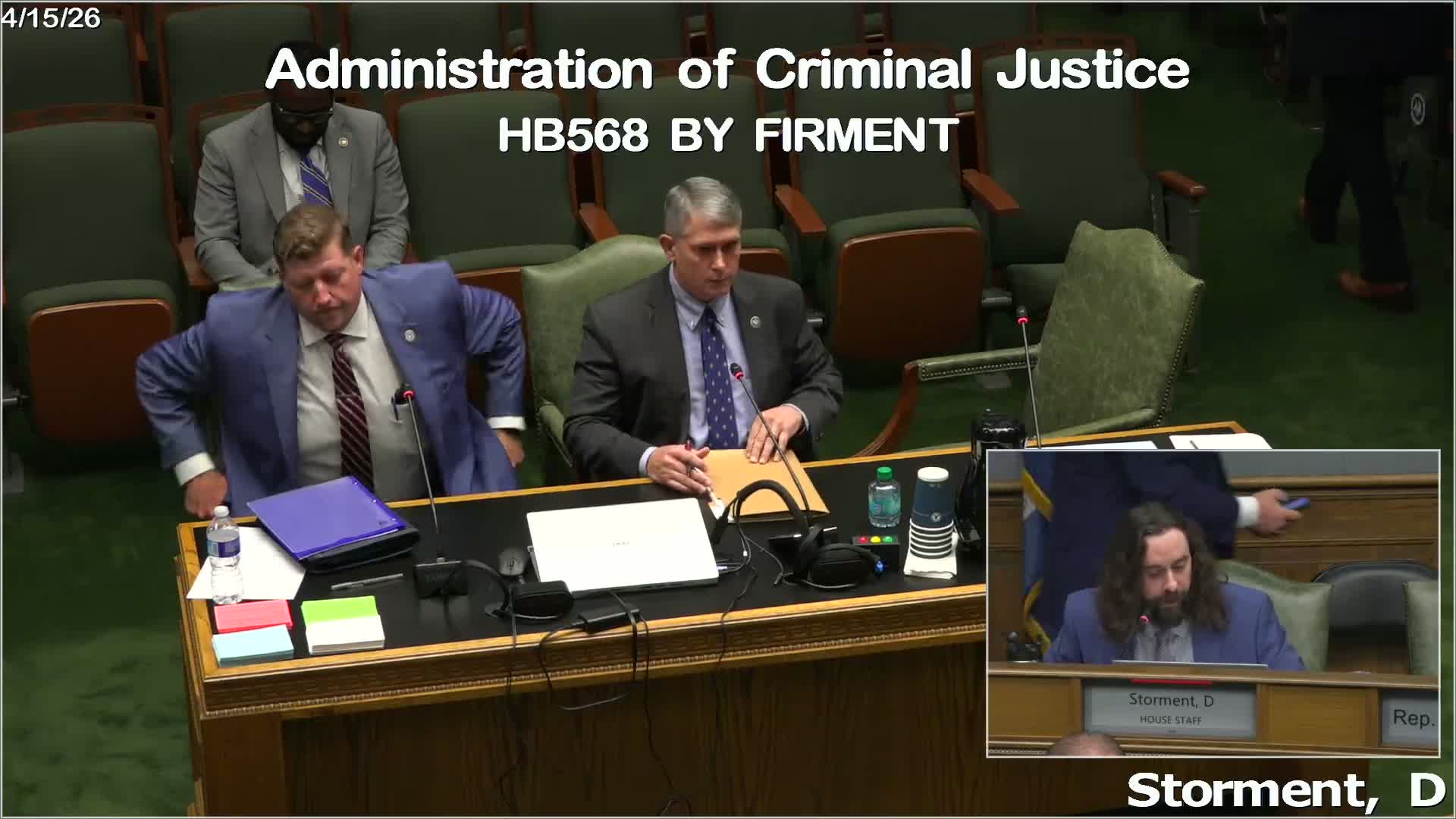
Chairman Ferment introduced House Bill 568 on April 15 as a measure to strengthen enforceability of drug‑free school‑zone laws. The bill targets visible, behavior‑based drug use on school property or within the statutory 2,000‑foot school zone and would increase penalties for certain offenses to create a meaningful deterrent.
Christopher Walters, deputy executive counsel to Governor Landry, described the current statute defining a drug‑free school zone as within 2,000 feet of school property and told the committee the bill seeks to fix a practical gap: “We have reduced that over the years to a simple fine, which has made it extremely difficult to police and to deter,” he said.
Members questioned the use of felony-level penalties including imprisonment at hard labor for smoking within a 2,000‑foot radius even when the activity may occur off campus. Representatives Knox and others pressed for clarity about whether the bill targets active smoking/vaping or mere odor and noted practical enforcement concerns. Sarah Whittington of the ACLU urged caution, warning the bill could lead to overcriminalization and burdens on courts and law enforcement: “I cannot support the idea that someone would receive a hard labor sentence in this manner when possession alone is a misdemeanor,” she said.
The committee adopted committee‑originated amendments clarifying the statute’s behavioral trigger and added language requiring electronic monitoring providers to comply with existing Title 15 requirements where relevant in other bills discussed that day. After discussion and amendment, the committee reported HB 568 favorably by voice vote.