Representative Galvin hosts A2P2 briefing on early childhood brain development
Loading...
Summary
At a legislative lunch-and-learn, leaders from the All Alaska Pediatric Partnership explained the science of early brain development, highlighted state programs (Infant Learning Program, Head Start, Help Me Grow Alaska, Growing Minds) and answered questions about access and economic returns.
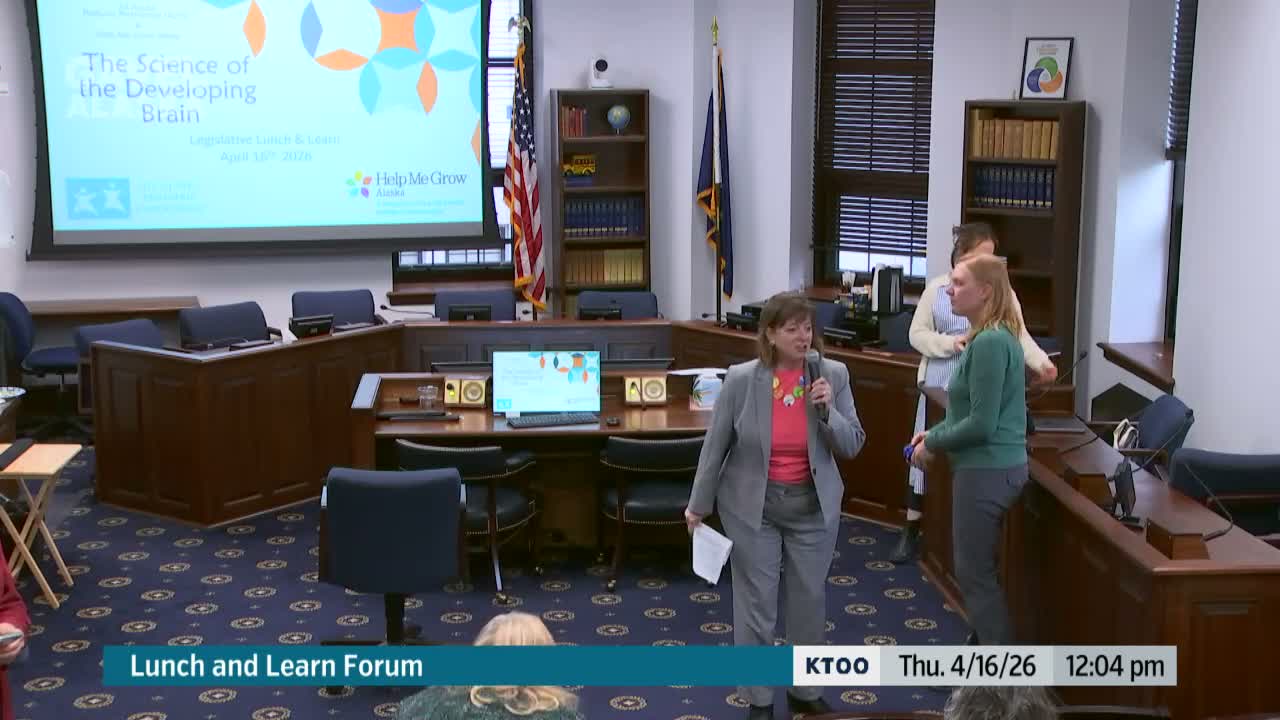
Representative Galvin hosted a lunch-and-learn at the Alaska State Capitol where leaders from the All Alaska Pediatric Partnership (A2P2) outlined the science of early brain development and described state programs intended to connect families to services.
Tamara, executive director of A2P2, framed the organization’s role in Alaska and described Help Me Grow Alaska as a centralized navigation and care-coordination service for families and providers. Carmen Wenger, A2P2’s director of programs, led an interactive presentation that emphasized rapid early brain growth, the importance of responsive adult-child interactions and the need to align policy and services with that science.
"Every second, 1,000,000 new connections are being made in a baby's brain," Carmen Wenger told attendees, summarizing a key point from the presentation about neural development. She and other presenters explained that the brain undergoes a period of synaptic overproduction followed by pruning, and that about 60% of physical brain growth occurs by age 3 and roughly 92% by age 5. The presenters said these dynamics make early years a critical window for interventions that support school readiness and long-term well-being.
The briefing included several Alaska program highlights. Tamara described A2P2’s Help Me Grow Alaska as "a connection point" that offers a call center and a short online referral form; Carmen said the call center operates 8 a.m. to 5 p.m. and accepts referrals from providers or self-referrals from families. Carmen also described a new Growing Minds consultation line that offers free coaching to providers to help them manage challenging behaviors without resorting to exclusionary discipline.
Attendees asked about the economic case for early investment. When a legislator asked for a dollar estimate from James Heckman’s research, Tamara said, "I believe for the Heckman, I think it's $7," and cautioned that results vary by study design and included costs. Representative Galvin added a local data point from an Infant Learning Program example presented to the group, saying that the presenters reported an "approximate cost savings" of $227,000 per child who received services between ages 1 and 3.
Participants raised concerns about screen exposure and early language: Carmen warned that high doses of screen time can replace the human "serve-and-return" interactions that build neural connections, and a first-grade teacher in the audience said one study reported a drop in the number of words known by children entering early grades (from about 25,000 to roughly 12,000 in the cited study), linking that decline to later reading proficiency concerns.
Presenters closed by encouraging legislators and staff to consider policy and funding steps that make it easier for families to access programs and to co-design services with families and community providers. The presenters remained available for follow-up questions in the hallway after the session.