Iowa City finance director says property tax levy will fall 20cents after sales-tax offset
Loading...
Summary
At a special April 7 meeting, Finance Director Nicole Davies told the council the proposed property tax levy would drop 20cents after using new local option sales-tax revenue; a county notice that showed an increase is based on an assumed 10% home-value rise and can be misleading for many homeowners.
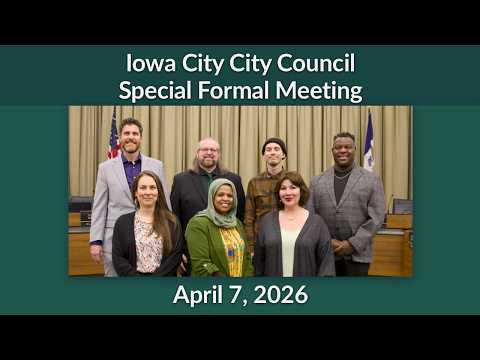
Iowa City held a special council meeting April 7 at city hall where Finance Director Nicole Davies said the proposed property tax levy would fall 20 cents after the city used newly available local option sales-tax revenue to offset other levies.
Davies told the mayor and council during a public hearing that state tax legislation forced a small reduction in the general levy, which the city offset by increasing the employee benefits and debt service levies while applying local option sales-tax revenue to lower the overall levy. "So net result is a 20¢ decrease to the property tax levy," she said.
The presentation focused on why the countys mailed notice of tax changes can appear confusing to residents. Davies said the notice lists a rate increase of 1.89 but explained that the notice assumes a 10% increase in home values. "What the notice shows is assuming a 10% increase in value, and that's not reality," she said, adding that if a 5.5% increase were used as an example, the result would be about a 2.29% decrease in taxes for the typical homeowner.
The finance director described the mechanics in plain terms: while the general levy fell because of state action, the city increased other levies and used the new local option sales-tax dollars in part to reduce the property tax burden this year.
During the public-comment portion of the hearing, Mackenzie Derew, representing Greater Iowa City Inc., praised the councils planned use of the sales-tax revenue. "On behalf of Greater Iowa City Inc, I'd like to thank you for your careful consideration of how best to use the new revenue from the local option sales tax passed by the voters this fall," Derew said. She urged the council to continue considering the needs of local businesses, noting that 95% of Johnson County businesses are small businesses with fewer than 50 employees and that property-tax increases can be hard on those firms.
The mayor closed the public hearing after no further in-person or virtual comments, and the council moved to adjourn. The motion to adjourn was made (mover not specified in the transcript), seconded by Alter, and passed by a 7-0 vote. The proposed budget discussed at the hearing covers the fiscal year ending June 30, 2027; the hearing record now closes with the council having received public input on the levy and budget.
The council did not take a final adoption vote on the budget at the special meeting; the public hearing provided information and comment for the ongoing budget process.