DOT presents sidewalks/accessibility bill tied to ADA settlement; council raises cost, waiver and utility concerns
Loading...
Summary
DOT presented Council Bill 25‑0119, prompted by an ADA partial consent decree, which would raise the minimum sidewalk width citywide and require property owners to ensure sidewalks are safe at property transfer or certain permits. Council members raised practical and equity concerns about costs, narrow historic blocks, utility pole placement and the waiver process; the committee deferred further action.
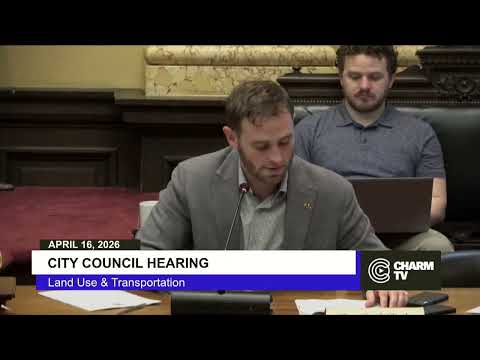
The Baltimore City Department of Transportation told the Land Use & Transportation Committee April 16 that Council Bill 25‑0119 implements obligations from a recent ADA partial consent decree and would accelerate repairs to sidewalks, curb ramps and other accessible infrastructure across the city.
Luciano Diaz (DOT) said the PCD requires the city to invest in accessible infrastructure and described the bill’s principal provisions: increase the minimum required sidewalk width from 4 to 5 feet (to match DOT’s standard), require property owners to correct safety hazards when transferring property or applying for certain permits, permit property owners to use licensed providers and submit a self‑certificate to DOT, and allow random DOT inspections within five years of self‑certification. Diaz also said DOT’s preliminary staffing estimate to implement the inspection program is four additional staff if the city sees about 10,000 transfers per year.
"The terms of the PCD are that the city will invest in sidewalks, curb ramp, and other accessible infrastructure," Diaz said, describing the bill as a component of the settlement.
Several council members raised concerns about the practical impacts of raising a citywide minimum to 5 feet, particularly in older rowhouse neighborhoods where many blocks cannot physically accommodate both sides at 5 feet. Valerie Lacour, chief of DOT’s ADA Compliance Division, clarified technical points: the city’s standard is 5 feet, waivers can allow 4 feet in the context of a block, and the bare minimum passing zone is 36 inches; anything below 36 inches is unacceptable.
Council members pressed DOT on who will bear costs for upgrades, whether the city or property owners would be responsible for bringing long swaths of sidewalks into conformance, and how the waiver and permitting process will work on narrow streets and alleys. The chair also raised operational issues: outdated or hard‑to‑find technical documents (the DOT Book of Standards) and longstanding utility pole placement tied to century‑old franchise agreements with BGE that complicate relocation of obstructions.
Public testimony came from Ari Plow of the Greater Baltimore Board of Realtors, who opposed the current bill as overbroad and urged narrower alternatives limited to properties with violations or clear safety problems. The committee did not vote on the bill and will reconvene for follow‑up meetings with DOT and council staff to refine language and implementation details.
Next steps: DOT will supply follow‑up materials on technical standards and street‑cut regulation updates; the committee plans additional meetings to address waiver procedures, funding options and utility pole coordination before returning the bill for further consideration.