Get Full Government Meeting Transcripts, Videos, & Alerts Forever!
Get email alerts on the Bop Agency Reform topic
No spam. Unsubscribe anytime.
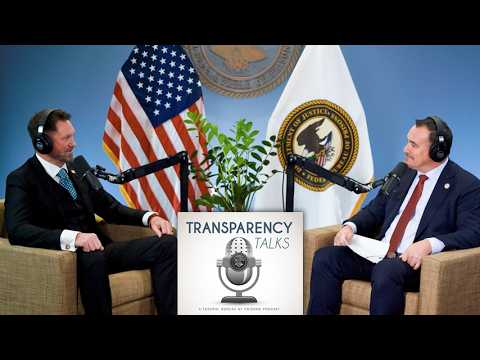
BOP director Bill Marshall reviews first year, citing hires, policy overhaul and federal funding
Summary
Director Bill Marshall told the podcast Transparency Talks that his first year leading the Federal Bureau of Prisons focused on staffing, facilities and policy reform; he cited mass hiring interviews, strike-force facility projects, a new communications push and plans to use recent federal funds for deferred maintenance.
Bill Marshall, director of the Federal Bureau of Prisons, told the podcast Transparency Talks that his first year in office focused on fixing deep staffing and facility problems while overhauling long-standing policy and communications practices.
Marshall said the bureau walked into a “$600,000,000 deficit,” large understaffing and an estimated $4,000,000,000 backlog of deferred maintenance. "We saw the tip of the mountain when we first got here, and now I think we can see at least the whole mountain," he said, summing up the agency’s initial assessment. Moderator on the program framed those figures as the basis for an aggressive hiring and facilities agenda.
Why it matters: the bureau manages federal prisons nationwide and its staffing, policy and facility decisions affect safety, operations and costs. Marshall said addressing short-term problems set the stage for longer-term changes.
Most immediate steps and outcomes: Marshall described a large recruitment push. The hosts said the bureau conducted 93 warden interviews (14 hires so far, roughly 20 more approved) and 228 associate warden interviews with 59 hires. He said the leadership has made 63 combined visits to institutions, formed strike force teams that completed four major projects and reported about $20,000,000 in savings from those efforts. "We're pushing the bureau farther and faster than it's ever been pushed before," Marshall said.
Facility and staff-focused changes included more site visits, 41 staff recalls for central-office staff, and efforts to address day-to-day workplace problems—locking doors, plumbing, fire-suppression systems—that the speakers said were a major source of staff frustration. Moderator and Marshall emphasized responding to staff input: an open email line produced more than 1,800 messages that leadership says it reads and answers.
Inmate-facing services: the hosts said the bureau processed more than $1,000,000 in donations for programs and increased phone minutes for inmates from about 3 minutes 10 seconds to 5 minutes 10 seconds per call. They said commissary spending limits were adjusted and volunteer hours have increased compared with the prior year.
Policy and labor context: the episode’s hosts said a recent cancellation of a collective bargaining agreement allowed the bureau to move faster on policy updates. The bureau reported 102 policies in progress and multiple long-standing policies being consolidated or revised. "If policy don't work for you, let's fix it," Marshall said, describing the approach.
Transparency and communications: both speakers highlighted an increased external communications push—videos, podcasts and stakeholder outreach—to showcase staff work and contraband enforcement. Marshall said the goal is to be honest and open with employees and outside stakeholders: "We're gonna pull the curtain back. Come in. See what you see. Tell us what you think."
Budget and year-two outlook: looking ahead, Marshall said he hopes the bureau will have put out many of the “bigger fires” and will use recently appropriated federal funds to address deferred maintenance and other priorities. He referenced the inflow of funds from a recent federal bill and said the bureau must prioritize how to spend that money to strengthen the agency.
What remains uncertain: the hosts and Marshall repeatedly acknowledged ongoing budget constraints and that many initiatives are unfinished. The speakers discussed possible statutory language changes to expand the bureau’s ability to transfer inmates to halfway houses or home confinement, but said changes would require legal or statutory action.
The episode closed with the hosts planning a follow-up the next year to review progress.