Get Full Government Meeting Transcripts, Videos, & Alerts Forever!
Get email alerts on the Mental Health System Performance topic
No spam. Unsubscribe anytime.
Experts and a former patient tell subcommittee U.S. mental-health spending hasn’t delivered better outcomes
Summary
A congressional subcommittee heard experts and a former patient argue that rising mental-health treatment and spending have not produced better population outcomes, highlighting overmedicalization, enforcement gaps and calls for better tapering guidance.
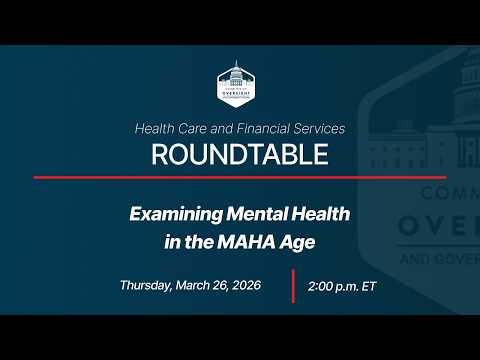
The subcommittee on health care and financial services convened an informal roundtable to examine why the United States is treating more people for mental health conditions while population measures of mental health worsen.
The hearing’s witnesses — David Hyman, an adjunct scholar at the Cato Institute and health-law professor; Sally Satel, a practicing psychiatrist and senior fellow at AEI; and Laura Delano, founder of the Intercompass Initiative and a former patient — sketched a broad diagnosis: larger treatment volumes and higher spending have not produced measurable population benefits. “If we are treating more people than ever before, why are we not seeing better results?” the chair asked, framing the session’s central question.
Hyman emphasized system-level factors: faster spending growth on mental health than on other medical care, substantial federal exposure through Medicaid and Medicare, and persistent fraud and enforcement delays. “Fraud is everywhere,” he said, urging front‑end payment and program redesign to reduce incentives for abuse and improve value.
Satel focused on clinical practice and diagnostic trends. She cited CDC data showing rising autism diagnoses in children and warned that ADHD and some conditions are being overidentified and too quickly treated with medication rather than time‑intensive behavioral therapies. She also highlighted rising methamphetamine‑induced psychosis and a recent cohort study linking adolescent cannabis use with higher risks of psychosis and bipolar disorder.
Delano delivered a personal account of long‑term medication use that she says harmed her, called for U.S. guidance on safe tapering, and said thousands have sought support from her nonprofit after struggling to stop psychiatric drugs.
Witnesses and members debated possible responses: stronger postmarket surveillance and statutory changes, better payer‑side incentives, more investment in behavioral therapies, workforce and access reforms, and consumer‑facing tools. Several speakers urged caution in equating more treatment with better outcomes and recommended targeted reforms for those with severe illness while reducing unnecessary medicalization for others.
The subcommittee did not vote on legislation at the session. Members signaled interest in follow‑up oversight and data collection to evaluate program value and reduce fraud and harm.