Votes at a glance: PPS board passes rightsizing resolution, calendar and contracting rule changes
Loading...
Summary
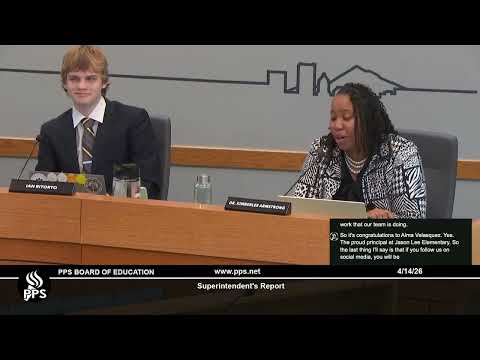
At its April 14 meeting the Portland Public Schools board approved Resolution 7296 to begin a districtwide rightsizing process (5–2), adopted the 2026–27 regular meeting calendar (Resolution 7290, 7–0), and approved amendments to public contracting rules (Resolution 7291, 7–0). Consent agenda items were also approved.
Results from the Portland Public Schools board meeting on April 14, 2026:
- Resolution 7296 — Direct the superintendent to begin a districtwide rightsizing process: Approved, 5–2. The resolution authorizes a phased process including community engagement, decision‑making criteria, equity analyses, timelines and financial transparency; Student Representative recorded a no vote.
- Resolution 7290 — Calendar of regular board meetings (2026–27 school year): Approved, unanimous (7–0). The calendar includes several timing adjustments, including moving the first post‑winter‑break meeting and an altered December schedule to avoid a holiday week.
- Resolution 7291 — Amendments to the district's public contracting rules: Approved, unanimous (7–0). The edits remove redundant language and align district policy with Oregon public procurement statutes and recommended best practices; staff committed to follow‑up documentation explaining the statutory changes and their impact on reporting thresholds.
- Consent agenda (items including resolutions 7292, 7293, 7295 and 7297 and routine contracts): Approved, unanimous (7–0).
What happened in the meeting: The rightsizing measure was the most contested item; board members debated whether to adopt detailed guardrails immediately or after the planned round of community engagement. Several amendments were introduced and votes were taken on insertion of more prescriptive language; parts of those amendments passed while others failed. The final adopted language explicitly lists possible outcomes (including boundary changes) and requires staff to present decision criteria and equity analyses prior to developing proposed scenarios.
Next steps: Staff will prepare the decision‑making criteria and continue community engagement sessions; board members scheduled time on upcoming meetings for additional discussion and asked staff to provide synthesized engagement findings and analyses.