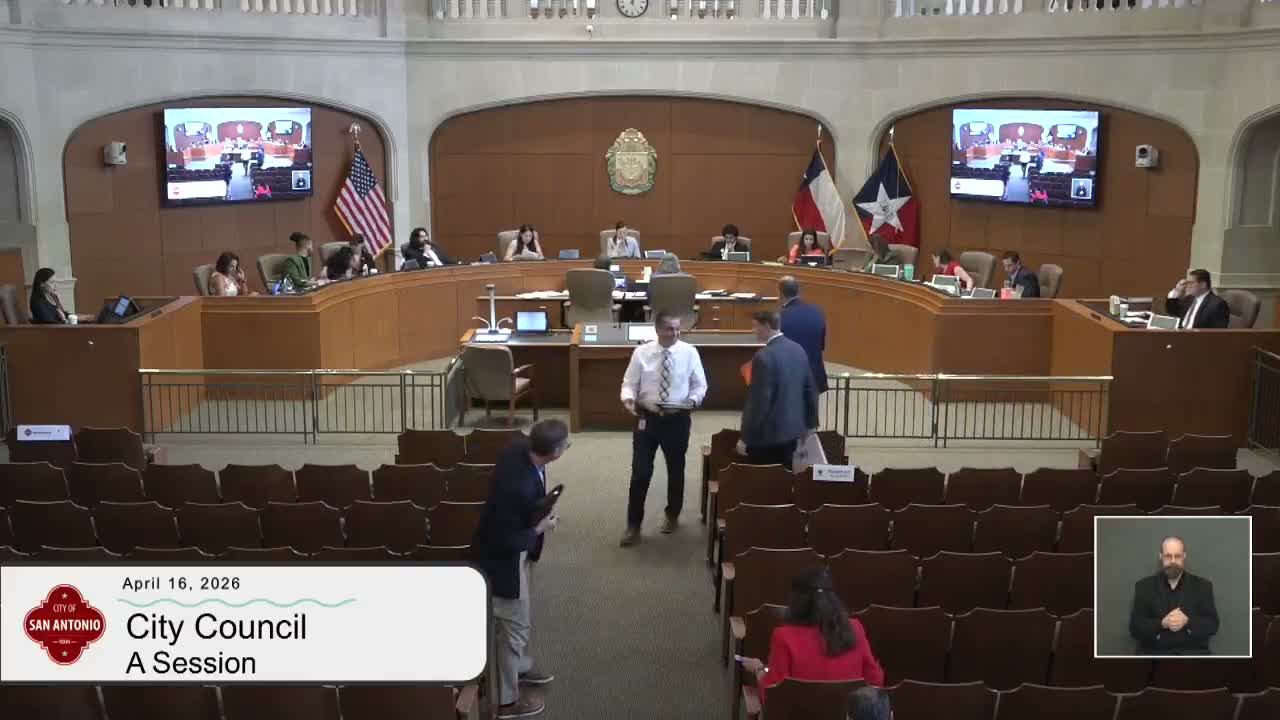
San Antonio council approves ordinance to regulate construction and operation of certain detention facilities
Loading...
Summary
On April 16, 2026 the San Antonio City Council approved ordinance 0.19 amending city building, fire and unified development codes to require notification, special authorization and siting limits for certain detention facilities after public testimony and extended council debate; vote tally not specified in the record.
The San Antonio City Council on April 16, 2026 approved ordinance 0.19, a package of amendments to the city building code, fire code and unified development code intended to regulate the construction and operation of certain detention facilities within city limits.
Supporters, including Sara Cruz, representing SLO, told the council the measure is “a good first step” to protect residents and detained people and to “use all the tools available” to ensure appropriate protections and conditions. Cruz and other public speakers raised concerns about conditions reported at some detention facilities and urged local oversight measures to require adequate fire and building protections.
Opponents called the ordinance largely symbolic. Jack Finger told the council the change “does not do absolutely anything apart from making the political statement you want to make,” and argued it would consume staff time and city resources without practical effect. Finger also questioned whether typical city contracts and campaign contributions create conflicts of interest that should be more directly addressed by disclosure or recusal rules.
Council debate highlighted two recurring themes: the limits of municipal authority where federal or state jurisdiction exists, and the council’s power over local land use and zoning. Several councilmembers said the ordinance does not attempt to override federal law but instead creates a local zoning and permitting structure to review proposals to build or operate detention facilities, including a special authorization process and siting limits (including a 1,000-foot separation from schools, residences and places of worship for some facility types).
Supporters noted the city has a duty to demand clear operational and safety standards and to require public notification and interdepartmental coordination when such facilities are proposed. Dissenting members warned of legal risk and urged caution so the city is not exposed to state preemption or costly litigation; one councilmember noted the city’s zoning commission recommended denial and framed the issue as ultimately a council-level policy choice.
The ordinance was put to a vote and the motion passed; the meeting record notes the motion carried but does not include a roll-call tally or names of the motion’s mover and seconder in the spoken record. The council concluded the meeting at about 11:56 a.m.
What’s next: The ordinance becomes city law as adopted and will be applied to future proposals that meet the code definitions in the amendments. The transcript does not list a specific effective date or a formal vote tally in the public remarks, and it does not record any immediate implementation deadlines.