Lifetime Citizen Portal Access — AI Briefings, Alerts & Unlimited Follows
Committee urges corrective action for Gary Hardin Academy after district outlines targeted supports
Loading...
Summary
Sevier County told the State Board committee that Gary Hardin Academy serves students at high risk of not graduating and uses a blended credit‑recovery model; the committee recommended a corrective action plan to strengthen CCR outcomes despite a 93.4% graduation rate.
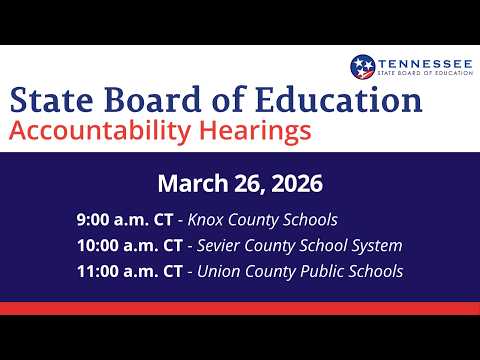
The State Board of Education’s accountability committee recommended a corrective action plan for Gary Hardin Academy after Sevier County officials described the school’s specialized role and the district’s interventions.
Sevier County presenters told the panel Gary Hardin Academy (established 2011) serves older high‑school students with significant credit gaps and other out‑of‑school challenges. The school uses a blended model with credit recovery platforms such as Edgenuity and Edmentum, small class sizes, flexible scheduling, individualized graduation plans and postsecondary counseling.
Ben Clabo, identified by the district as director of secondary education, told the committee the academy provides targeted supports, transportation that preserves students’ ties to their home high schools, and work‑based learning or college transition opportunities. He said the school’s most recent graduation rate was approximately 93.4% but acknowledged a persistent gap in college‑and‑career readiness (CCR).
Sevier County described a range of interventions supported with district turnaround grants: dedicated ELA and math interventionists, extended credit recovery (including summer programming), a staffed on‑site clinic, ergonomic supports, and career simulation and industry‑certification efforts (including VR welding simulations and CPR/ServSafe). The district said it is expanding career and industry certification offerings to raise CCR measures and plans to add a graduation coach.
Committee members pressed the district on CCR versus graduation rate disparities and on leadership and staffing supports at the school. After discussion, the committee recommended a corrective action plan; Chair Cobbins ordered the recommendation be forwarded to the full State Board of Education for its May meeting.
The corrective action plan recommendation will require the district to work with the Department of Education and provide continued reporting on the interventions described.