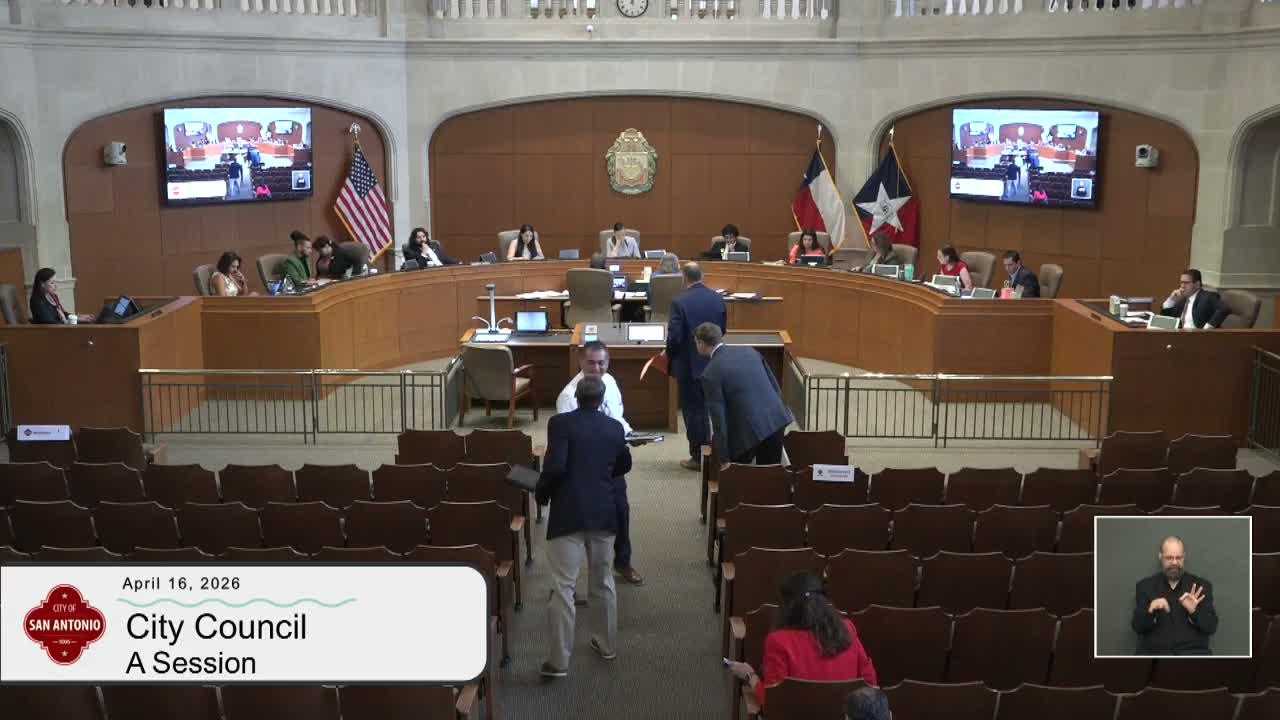
San Antonio council approves ordinance to regulate private detention facilities after heated debate
Loading...
Summary
The City Council adopted code amendments requiring notification, new definitions and location limits for proposed detention facilities, prompting divided council debate and public testimony from civil-rights groups, business leaders and residents. Supporters said the changes add oversight; critics warned of legal limits on local authority.
San Antonio — The City Council on April 16 approved amendments to the city building, fire and unified development codes that create new notification requirements, a specific definition for “detention facility,” and a use-authorization review intended to give the city earlier oversight of any entity seeking to construct, convert or operate a facility that holds people without free will.
The ordinance, pulled from the consent agenda for separate consideration, drew public testimony from civil-rights advocates and residents and sharp debate among council members before a motion to approve carried. The clerk read two letters of business support submitted for the record from Leo Gomez of Brooks and James Norte of SAGE San Antonio.
“This new ordinance here doesn't do anything,” Council member White said during deliberations, arguing the measure is largely symbolic and does not affect a federal facility the administration already purchased. “We do not have jurisdiction over these matters.”
Supporters defended the amendments as proper local zoning and public-safety tools. Council member McKee Rodriguez said the changes are within municipal authority and cited national patterns in which 90% of detained immigrants are held in privately operated facilities, noting the city should act to prevent predatory siting. “These private detention operators are right now working to reopen idling facilities and they will begin looking at cities with increased ICE presence,” he said.
Sarah Cruz of the ACLU of Texas urged council to adopt the ordinance as a first step to protect residents and people detained in facilities, saying attorneys have heard “firsthand from people detained by ICE about the unsafe conditions and physical abuse inflicted upon them.”
Councilwoman Spears raised legal concerns about overreach and the supremacy clause, warning that local regulation cannot “veto or obstruct lawful federal actions” and cautioned the ordinance could invite legal challenges if drafted too broadly.
City staff and the city attorney clarified the proposal’s scope during the meeting. The ordinance establishes notification and interdepartmental review requirements and bars detention facilities within 1,000 feet of residences, primary or secondary schools, places of worship and public parks unless a council-authorized rezoning occurs. Staff told the dais the proposed code changes were drawn from academic studies and modeled to withstand legal review; zoning staff also said the zoning commission previously recommended denial, urging council to make the policy decision.
Public commenters were split. The ACLU and community advocates urged action to protect constitutional rights and prevent harmful conditions in detention centers. Business groups that submitted letters said such facilities would be inconsistent with local economic development goals.
The motion to approve the ordinance carried; the clerk announced, “The motion carries.” The council did not provide an exact recorded tally on the floor during the meeting.
What happens next: The ordinance amends city codes and requires early engagement between operators and city departments. Because the text carves out case-by-case review and retains rezoning as a path for council authorization, proponents said it gives the city tools to protect neighborhoods; opponents said federal supremacy limits make the measure more performative than substantive. The council adjourned at 11:56 a.m.