Get Full Government Meeting Transcripts, Videos, & Alerts Forever!
Get email alerts on the Vocational Rehabilitation topic
No spam. Unsubscribe anytime.
Vending-machine owner credits DRS counselor and Randolph Shepherd program with helping him restart work
Summary
During public comments, Andrew Cole Zulof recounted losing work after his eye condition affected his driving and said his vocational counselor, Meredith Perry of Vision Rehabilitation Services, and the Randolph Shepherd program provided training, startup costs and a hired driver that helped him resume his vending business.
Andrew Cole Zulof, a vending-machine owner who works across the Putnam and Kanawha County area, told meeting attendees during public comments that he lost his previous job after an eye doctor would not sign off on his driver’s license and that vocational supports helped him return to work. “So I was born with a disability called retinitis pigmentosa, and it is where it slowly degrades your retina over time,” Zulof said, describing progressive vision loss he has lived with since childhood.
Zulof said losing driving privileges created his biggest barrier. He told the meeting he was unemployed for about eight months to a year after he lost his job and that the Division of Rehabilitation Services (referred to in the record as DRS) connected him with services that enabled him to restart his business. “Through the Randolph Shepherd program, which is under the DRS, they helped me hire an employee who would then drive me around and kind of help me with my day to day tasks,” he said, adding that the program provided training and some startup costs.
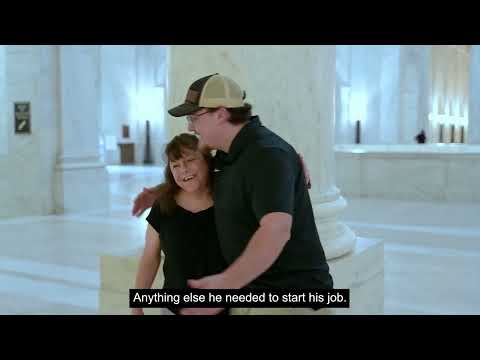
Meredith Perry, introduced in the record as a vocational counselor with Vision Rehabilitation Services, confirmed those supports. “He was provided with some startup costs to start his business. Anything else he needed to start his job,” Perry said, and added that Zulof had been given assistive technology and training through the program. Perry said she believes Zulof “has a very bright future” and could expand his business and hire employees.
Zulof emphasized the social as well as economic benefits of being back at work, saying he enjoys meeting “hundreds of different people” while servicing machines and that the job keeps him from going stir‑crazy. He closed by thanking Perry and Randolph Shepherd program staff: “All of these people have helped me get to where I am today, and I could not have done it without any of them.”
The remarks were recorded as public comment; no formal action, vote or motion was recorded in the transcript.