Richmond staff report finds layered subsidies complicate possible rescission of Regulation 202 exemptions
Loading...
Summary
Executive Director Fred Tran told the Rent Board staff has found multiple overlapping subsidy types at many Richmond affordable-housing properties, and that staff identified one property out of compliance while reviewing rent-roll data for about half of 29 properties; the board took the report and requested additional analysis of per‑unit impacts.
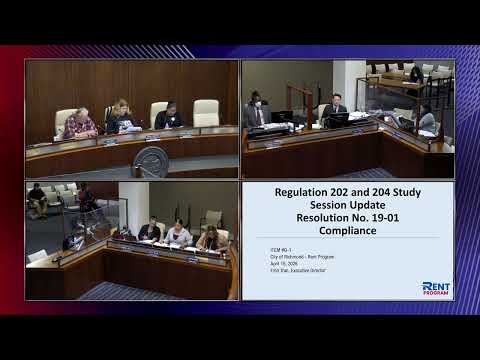
Executive Director Fred Tran presented a study-session update on Regulations 202 and 204 and a compliance review connected to Resolution 1901, saying staff’s review shows many subsidized properties have multiple, overlapping subsidy layers that complicate broad rescission of exemptions.
"There is more complexity," Tran said, explaining that properties may combine housing choice vouchers, project‑based vouchers, low‑income housing tax credits (LIHTC) and other subsidies. He said staff analyzed rent rolls from roughly half of the 29 properties under review and that, "overall the rents consistently did stay below the 5 percent" allowable increase, with one recently built property missing permit information and one property identified as not meeting all requirements.
Board members pressed staff on the legal effect of layered subsidies. General Counsel Charles Oena cautioned that a single federal subsidy tied to a unit can preserve a federal basis for exemption: even if the board removed an LIHTC exemption, a unit with a Section 202 or other federal subsidy could remain exempt from local rent control.
Tran told the board staff will continue follow-up with property managers that requested time to provide updated rent rolls after the county releases AMI percentages in April and that staff will present a more detailed impact analysis at a future meeting. "We did receive rent rolls for half of the properties," Tran said, and staff will keep working to reconcile inconsistent data formats and confirm whether increases were proper.
The board received the study-session update; no formal action was taken to change regulations at this meeting. Next steps: staff will complete the data reconciliation and provide a per‑unit impact assessment of any proposed change to Regulation 202.