Get Full Government Meeting Transcripts, Videos, & Alerts Forever!
Get email alerts on the Education topic
No spam. Unsubscribe anytime.
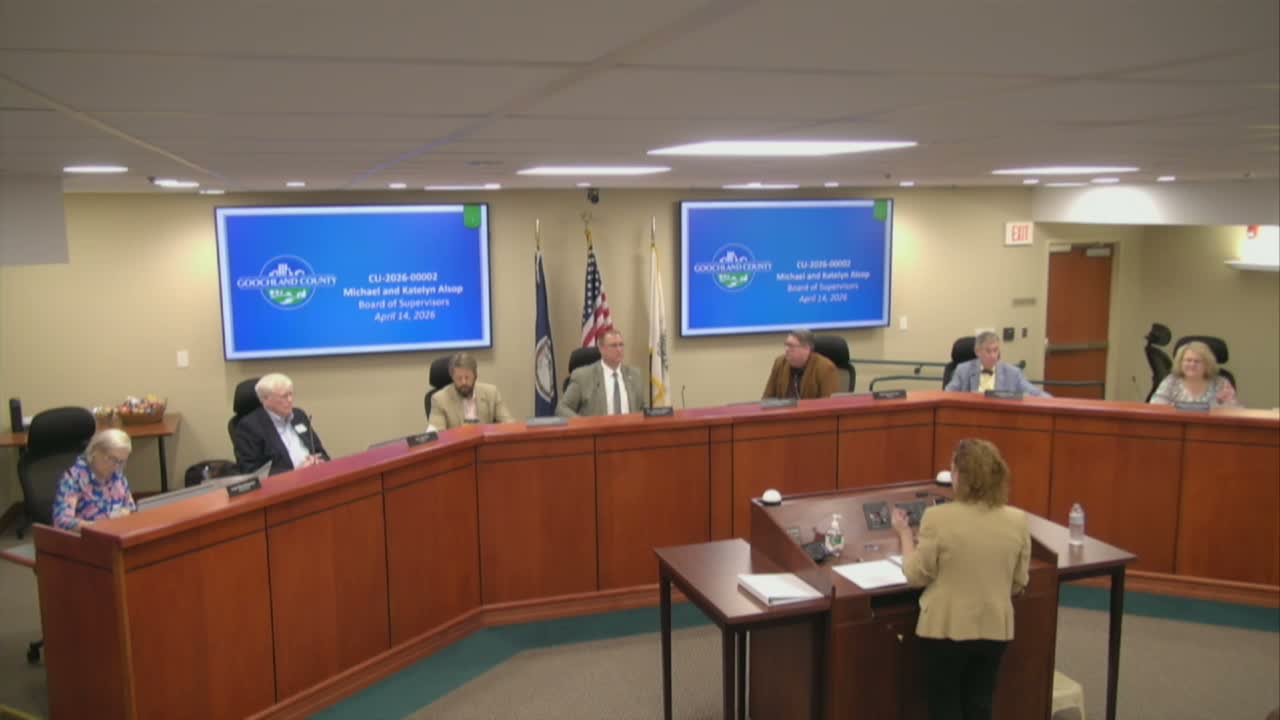
Acton Academy granted conditional use permit to relocate to Broad Street farm despite neighbor safety concerns
Summary
After hours of testimony from parents, students, neighbors and staff, the board approved Acton Academy’s conditional use permit to move to a Broad Street Road farm with conditions limiting student counts, hours of operation, lighting and landscaping; vote passed 3–1.
The Goochland County Board of Supervisors granted Acton Academy a conditional use permit to relocate to a roughly 7‑acre farm at the northwest corner of 3 Chop Road and Broad Street Road, subject to multiple conditions intended to mitigate traffic, lighting and site impacts.
Planner Jamie Sherry summarized staff and Planning Commission recommendations, including a two‑phase plan that would allow the school to operate at up to 85 students in phase 1 and expand to 125 at full buildout; conditions include dark‑sky lighting turned off by 9 p.m. (or two hours after sunset), a 6‑foot wooden fence along adjacent residential properties, perimeter plantings, limits on amplified outdoor sound, a transportation management plan, a plan of development requirement and a five‑year expiration tied to continued conformance.
Applicant Caitlin Allsup and families emphasized safety and community benefit. "We have outgrown our space," Allsup told the board, adding that parents and staff paid for traffic and engineering studies and that pick‑up times would be outside PM peak hours. The applicant said an internal loop and a traffic attendant at peak times would prevent stacking onto Broad Street Road.
Opponents — neighbors and long‑term residents — argued the crossing is already hazardous and cited sheriff’s office accidents, heavy farm truck traffic, concerns about well and septic capacity and preservation of the rural enhancement area. "These kids' lives are depending on you," one critic told supervisors, urging denial or deferral until stronger road improvements are secured.
Board members weighed preserving a rural landmark (the barn and silos) and the applicant’s retrofit approach against safety concerns. Several supervisors said the CUP conditions and plan‑of‑development review would provide enforceable controls; others urged caution and additional time to find alternative sites. The motion to grant the CUP passed on a roll call 3–1 (Winfrey yes; Waters yes; Lyle no; Spoonhauer yes).
The permit includes enforcement mechanisms through the plan of development and a requirement that any transfer or lease be preceded by notice to the county and the future owner or lessee. The board recessed after the vote and said staff will monitor adherence to the conditions and the traffic management plan.