Get Full Government Meeting Transcripts, Videos, & Alerts Forever!
Get email alerts on the DHS Processing Site topic
No spam. Unsubscribe anytime.
Surprise residents urge council to stop planned DHS processing site near Dysart High; council seeks legal, policy options
Summary
Hundreds of residents and state lawmakers pressed Surprise leaders to block a proposed DHS/ICE short-term processing site at 13290 W. Sweetwater, citing proximity to schools, water and safety concerns; councilmembers pledged follow-up, asked staff for legal options and scheduled future action items.
Mayor Kevin Sarter convened a crowded public-comment period on April 7 as residents urged the Surprise City Council to prevent a planned Department of Homeland Security (DHS) processing site at 13290 West Sweetwater from opening.
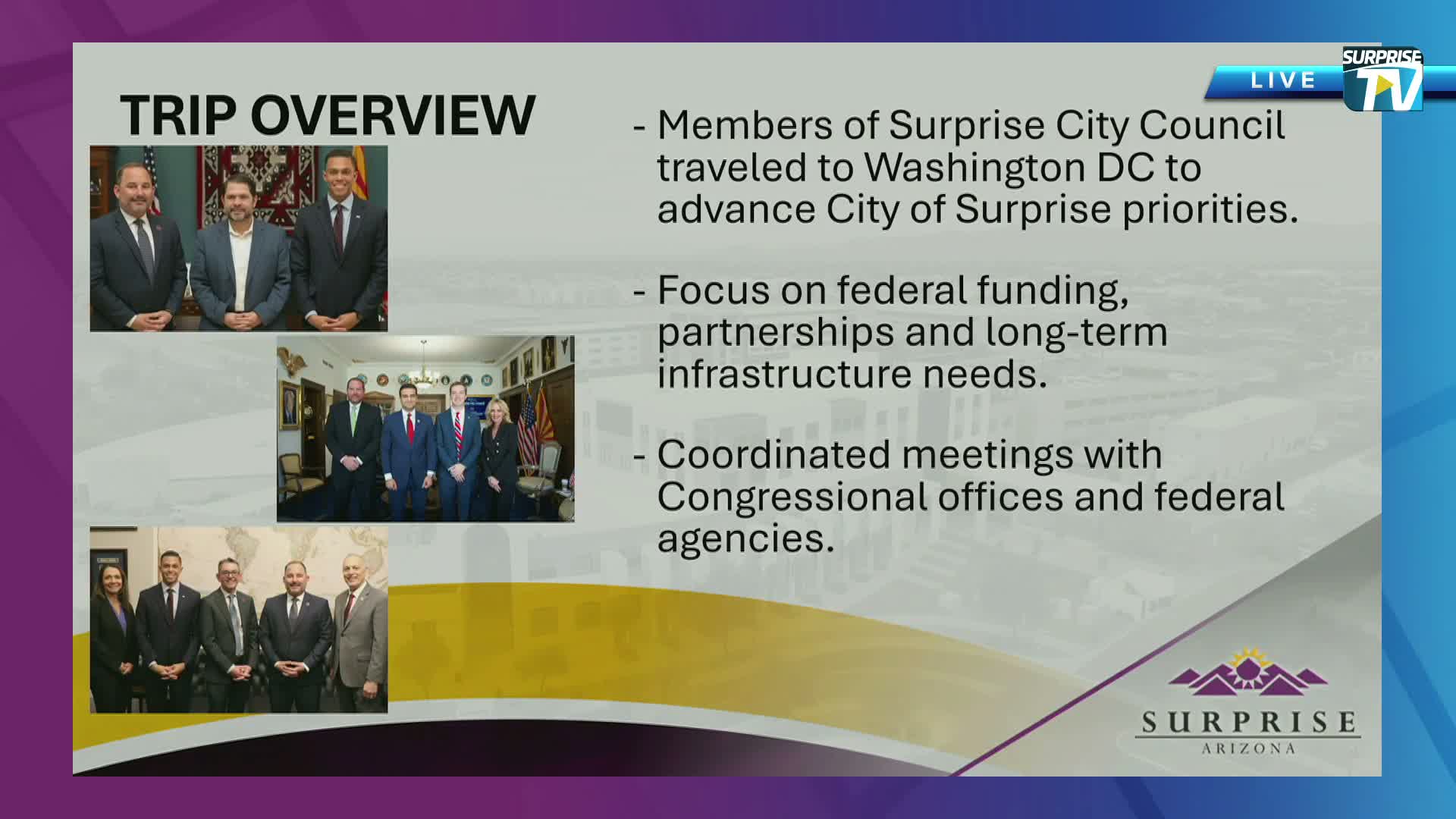
Hundreds of people packed the chamber during an extended public-comment block about the federal facility, which DHS has characterized in briefings to city officials as a short-term processing site for single adults with a near-term capacity of 542 beds and an average stay of three to seven days. During the debrief of a March Washington, D.C., advocacy trip, city staff said DHS indicated the site would be operated by a contractor and that federal officials plan to provide site plans, NEPA analyses and an intergovernmental agreement or similar legal instrument.
Why it matters: Residents, student leaders, state legislators and advocacy groups said the warehouse-conversion model DHS described is incompatible with local priorities and public safety. Many speakers demanded written, enforceable commitments and asked the council to pursue legal or policy tools — including lawsuits, moratoria, utility restrictions and a three-mile school buffer — to block or limit the facility’s operation.
"This is still a 418,000-square-foot detention facility near Dysart High School built to hold 542 people," said Amanda Kaminskas, a Surprise resident and caregiver who addressed risks for students and people with disabilities. "Calling it processing does not change the reality of confinement."
Public officials and activists pressed several specific concerns:
- School proximity and student safety: Dysart High School and more than 20 other schools lie within a few miles of the site. Student speakers said fear of enforcement has already affected attendance and behavior. Grace Brennan, a Dysart High senior, asked the council to back a three-mile buffer between any ICE facility and schools.
- Humanitarian and oversight worries: State Sen. Analise Ortiz and other legislators urged the council to seek legal remedies and to refuse to accept inadequate verbal assurances. "There is no compromise that should be made with DHS to open this facility," Ortiz said, citing national examples where local legal action blocked or delayed federal facilities.
- Water, infrastructure and fiscal impact: Council members and residents questioned projected water use and whether federal reimbursements would cover local costs for public safety and property impacts.
Council response and next steps: Several council members said they would press for enforceable agreements and legal options. Councilman Chris Judd said he would pursue a formal action item to empower staff to protect local authority, water and residents; he asked for the item to return to a future agenda. Councilman Jack Hastings and others publicly expressed opposition to the facility and pressed staff to seek written commitments from DHS. Mayor Sarter said the city would pursue additional information and noted the need for legal review before unilateral actions.
What DHS has told the city: In the March briefing summarized to council, federal officials described the Surprise facility as a short-term processing site used to hold single adults temporarily (three to seven days) before transfer to larger regional sites. City staff said DHS expected to share engineering and site plans and explore arrangements for a community-relations board and limited reimbursements for property impacts. DHS also told the city the facility would not conduct "unwarranted roving patrols" into schools, senior centers or places of worship and that federal protective services, not Surprise police, would be primary perimeter responders.
What residents want: Speakers urged Surprise to take immediate steps including filing suit, restricting utility service or imposing moratoria on warehouse conversions for detention use. Students and parents asked for a three-mile buffer between the facility and schools and for clear, enforceable written agreements that could be litigated if broken.
The council did not take a final action on the DHS site during the meeting. Multiple council members requested an item be added to the next council agenda to provide staff direction and legal authorization to pursue protections and potential litigation. The council also scheduled follow-up briefings and an executive-session discussion of legal options.
Provenance: Topic introduced in transcript at SEG 3148 and recurring through the public-comment block from SEG 3347 to SEG 4219. Quotes and claims above are drawn from recorded public comments and council discussion (see public-comment and staff briefing segments).