Lifetime Citizen Portal Access — AI Briefings, Alerts & Unlimited Follows
Surprise hears Colorado River risks, but CAP, EPCOR and city say current customers are protected
Loading...
Summary
Central Arizona Project and local utilities briefed Surprise council on Colorado River shortage scenarios and Reclamation’s draft EIS; CAP urged Reclamation to reassess the DEIS and said the state would likely litigate if a compact call occurs. EPCOR and the city said current and committed customers are protected under their portfolios.
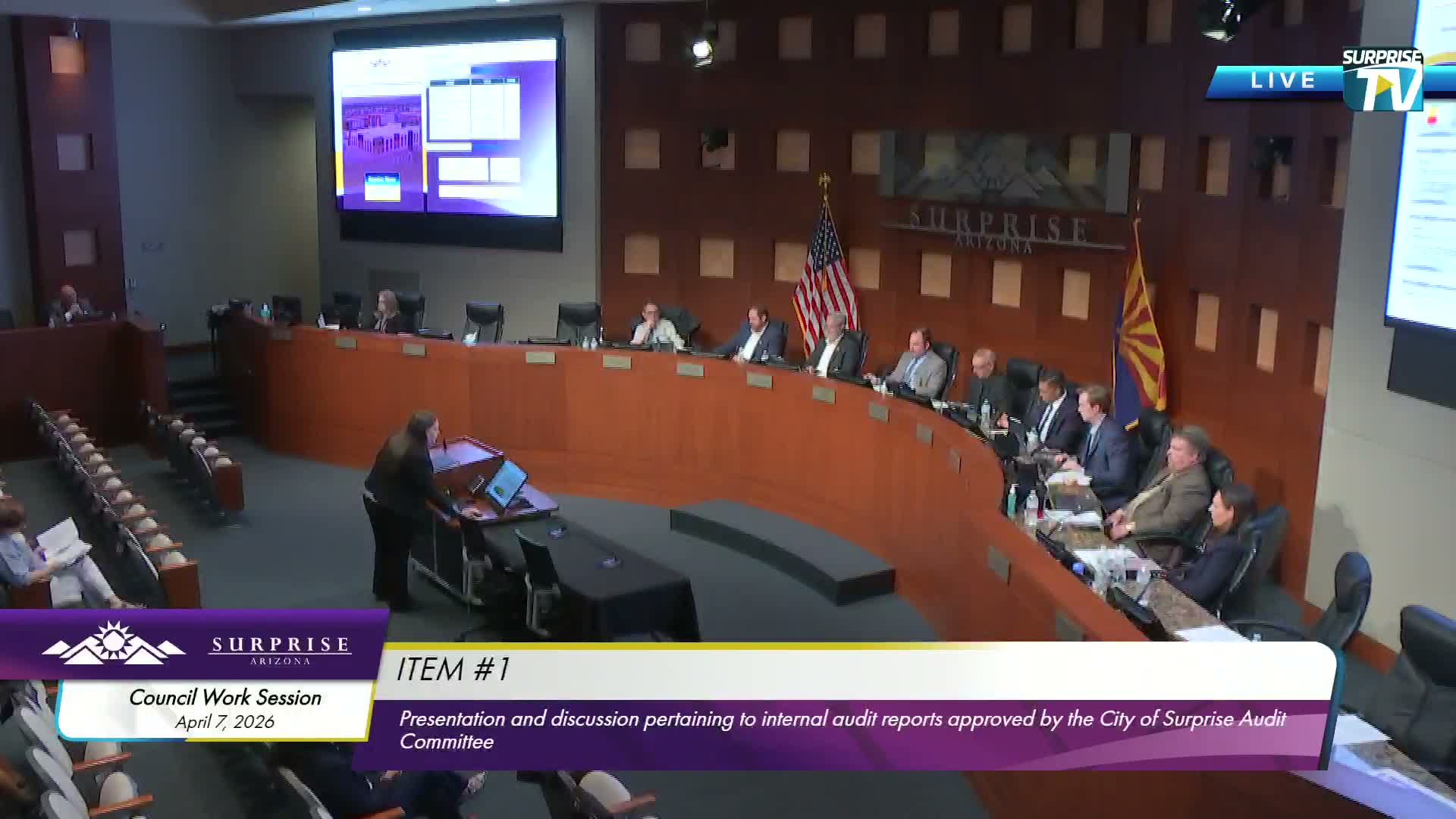
City officials and regional water providers told the Surprise City Council on April 7 that, despite a prolonged Colorado River shortage and wide-ranging federal proposals in a draft environmental impact statement (DEIS), current and committed customers in Surprise are protected by existing water portfolios — though future growth could be constrained under deep cuts.
Vinita Gartha of the Central Arizona Project told the council that mountain snowpack has been minimal and that this is the fifth consecutive year the Lower Basin has been in shortage. She summarized alternatives in the Bureau of Reclamation’s DEIS and warned some options would produce deep reductions to Lower Basin supplies: “If you look at the maximum operational flexibility under the deepest reduction, it is a 44% reduction to the entire lower basin’s allocation,” she said. CAP noted the draft EIS allocates a disproportionately large share of reductions to CAP and the Lower Basin and said it submitted formal comments asking Reclamation to withdraw and rework the draft.
“CAP submitted comments. We absolutely did not like the EIS at all,” Gartha said, urging that the DEIS analyze compact obligations and share reductions across the basin rather than applying cuts only to lower-division allocations. She added that decisions about Powell and Mead operations after 2027 will depend on a full EIS process led by the Department of the Interior.
Victoria Samwick, EPCOR’s West Valley water resources manager, summarized the utility’s portfolio after its October 2025 designation and said the company modeled responses across a range of reductions. EPCOR’s portfolio includes groundwater (about 55% of the system’s supply), effluent recharge/recovery, a CAP allocation (about 17,000 acre-feet) and surface supplies routed through Lake Pleasant. She said current demand in the West Valley is about 50,000 acre-feet and that EPCOR’s planning and infrastructure would allow the utility to meet current and committed demand even under a severe CAP reduction, though future growth could require additional renewable resources and planning.
Amy Peterson, the City of Surprise water resources manager, presented the city’s annual water-use update and planning scenarios. She said Surprise has banked roughly 15 years of water credits under current assumptions, recharged almost as much effluent as it delivered last year, and that account growth is outpacing demand growth (accounts up ~7.5% while demand grew ~5%). Under a severe scenario mirroring the DEIS extremes, the city’s ability to serve future new customers would be curtailed, but current and committed customers would remain protected.
Councilmembers pressed staff on compact obligations, infrastructure such as the White Tank plant and coordination with Maricopa Water District, and whether CAP would join state litigation if a compact call occurs. CAP said it would assist the state and has counsel and budget to participate in legal action if necessary. The DEIS public-comment deadline referenced in the presentation was March 2, 2026; Reclamation continues work on the EIS process that will inform operations after 2027.
City staff said they will convene water-resource roundtables and plan to return with an updated drought preparedness plan for council consideration later in the year; no formal policy votes were taken at the session.