After packed public comment, committee directs formation of agricultural advisory committee for rural zoning amendments
Loading...
Summary
Following extensive testimony from South County farmers, vintners and local leaders, the Hewlett Committee directed county administration to initiate applications for an agricultural advisory committee and to ensure advisory input before rural zoning amendments are finalized.
The Santa Clara County Hewlett Committee directed the county to immediately begin an application-of-interest process for an agricultural advisory committee and to ensure appointment consultations with board offices, after a large group of South County farmers, vintners, equine operators and local officials urged stronger stakeholder involvement in proposed rural zoning amendments.
Planning staff presented draft rural zoning amendments designed to implement the Santa Clara Valley Agricultural Plan (2018), clarify objective standards for agricultural and ag‑supportive uses, set CEQA thresholds for agricultural soils, and consider policy changes such as on-site agriculture thresholds and a voluntary registry for legal nonconforming operations. Senior planner Erin Yatao and Director Jacqueline Anciano said the amendments aim to preserve valuable soils, improve predictability for applicants and standardize processes.
Public comment was vigorous: farmers and winery owners argued that small‑farm viability depends on the county’s ability to allow agritourism, farm sales, and small events without prohibitively high fees or burdensome permitting. "Eliminating her position doesn't just cut a line item. It severs a relationship to the county that is already quite precarious," Kim Inglehart, president of the Wineries of Santa Clara Valley, told the committee, referring to the agricultural liaison role.
Speakers repeatedly requested that the advisory committee be a genuine co‑creator of policy, not a post‑hoc reviewer; commenters asked staff to pause enforcement that could penalize long‑standing operations while the code is updated. Planning staff said a neutral consultant will be retained to facilitate workshops and that draft revisions will be informed by outreach.
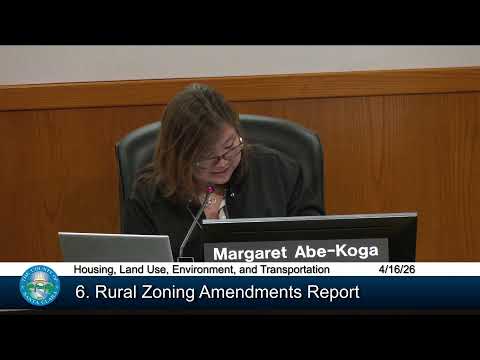
Supervisor Sylvia Arenas moved the recommendation to start the application process and to ensure advisory review before staff returns amendments to the committee; Chair Abe-Koga seconded the motion. The committee approved the motion by recorded roll call (Arenas "Yes"; Abe-Koga "Aye").
Staff described next steps: DPD will secure a consultant to run participation‑based workshops, develop an agricultural-advisory application process in consultation with board offices, and integrate advisory feedback into future drafts. The staff report also outlined options under consideration — including adjusting on-site agriculture thresholds (monetary tests), revising building-site coverage caps, and creating a voluntary registry to document legal nonconforming operations.
What happens next: Planning staff will carry out the outreach and advisory‑committee formation steps directed by the committee; specific code language and CEQA thresholds will be refined through workshops and returned to the committee before any final ordinance amendments are forwarded to the full Board.