Get Full Government Meeting Transcripts, Videos, & Alerts Forever!
Get email alerts on the Budget Override topic
No spam. Unsubscribe anytime.
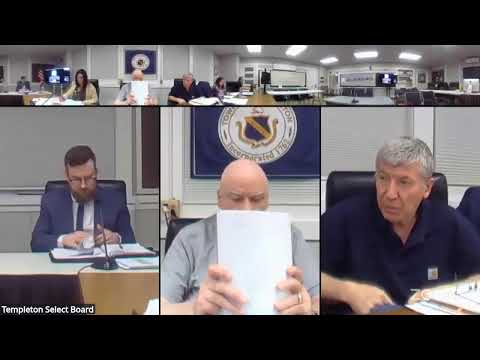
Templeton select board to present tiered override options after contentious budget review
Summary
Facing a roughly $3.0M combined fiscal gap driven by a $2.0M school assessment increase and town-side shortfalls, the Templeton Select Board agreed March 26 to prepare both an override and a no-override budget and seek voter guidance with multiple tiered override questions.
The Templeton Select Board agreed on March 26 to prepare both an override and a no‑override FY27 budget and to present multiple, tiered override questions to voters, after a lengthy debate over steep cuts and the town’s share of a $2 million school assessment increase.
The board’s discussion centered on whether to ask residents for an override large enough to cover the projected shortfall or to present several options so voters could choose how much to add to the levy. The town administrator told the board he had prepared an exercise showing possible town-side cuts of about $910,000 to illustrate what reductions would look like.
Why it matters: Templeton officials say the combined town and school shortfall could exceed $3 million if the school assessment is fully allocated to the town, creating pressure to either enact deep service cuts or seek additional local revenue from voters. An override could reshape services and staffing for multiple years; if rejected, the board would implement a no‑override budget with the attendant reductions.
Board members disagreed over priorities but signaled broad consensus to let the voters decide. “We could actually say, no. We’re not doing it because we’re the only ones who can put it on it. But I feel we have an obligation to put it to the voters and let them make the call,” the chair said, urging transparency around the choices.
The chair presented example override amounts and estimated tax impacts: "A $1,000,000 override...an 83¢ increase in the current tax rate" — translating to an average single‑family‑home increase of about $313.98, while a $2,000,000 override would raise the average by roughly $631.72 and a $3,000,000 override by about $945.72, according to the figures the board discussed.
Several members pushed for a tiered ballot approach. One member argued for giving voters multiple options so residents could pick the level they prefer; another warned that any large override risks long‑term tax commitments: once levy capacity increases, “you really don't come back down from that number,” the member said.
The board directed the town administrator to develop two parallel budgets — a no‑override budget and a tiered set of override scenarios — and to provide updated tax‑rate estimates and explanatory materials before the April 6 meeting, so the board can finalize the questions for the town clerk by the April 13 submission deadline.
Next steps: The board will revisit the override options and finalize the warrant language at its April 6 meeting. If an override question(s) is placed on the ballot and passes, the board still must appropriate the additional levy at town meeting.