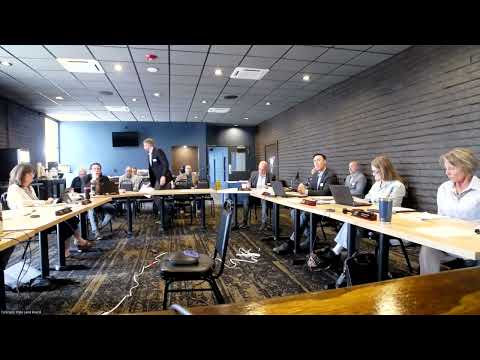
State Land Board adopts updated Lesser Prairie Chicken stewardship plan, with new no-lease guidance for focal areas
Loading...
Summary
The Colorado State Board of Land Commissioners voted 5–0 to adopt a five-year update to its Lesser Prairie Chicken Stewardship Action Plan, directing staff to step up habitat assessments, lessee engagement and carry forward stipulations that restrict development in core areas and connectivity zones.
The Colorado State Board of Land Commissioners unanimously approved a revised Lesser Prairie Chicken Stewardship Action Plan on April 9, directing staff to update habitat assessments, continue lessee engagement and apply stronger leasing stipulations in priority habitats.
Mindy Godseigan, stewardship and ecosystem services program manager, presented the 2026 update, describing new and carry-forward measures staff says are intended to protect declining lesser prairie chicken populations on state trust lands across five southeast Colorado counties. "The board typically approves those for a period of 5 years," Godseigan said, explaining the plan's cadence and staff responsibilities.
The plan outlines findings from on‑the‑ground habitat assessments and population counts, summarizes that the state currently owns roughly 81,000 surface acres in the region and about 170,000 mineral acres, and reports declines in Conservation Reserve Program enrollments on trust lands (from 20 to six contracts). It also notes a marked increase in renewable-energy acreage on trust land over the last five years, from around 3,000 to almost 8,000 acres in planning and production.
Key measures in the update include: periodic multi‑season habitat assessments beginning in 2026; stronger development stipulations in core and connectivity zones (including limits on surface density, seasonal timing, noise and reclamation requirements); continued requirement that lessees meet early with Colorado Parks and Wildlife (CPW) staff; and no new oil, gas, solid mineral or renewable-energy leasing in focal areas and connectivity zones, staff said.
Public commenters — including ranchers and local officials — praised outreach but warned of economic impacts. "Revenues for schools and protecting the resource are the prime objective of the state land," RJ Jolly, a Cheyenne County commissioner, told the board, urging clarity on what staff means by focal areas. Dallas May, a rancher and Colorado representative for the Western Landowners Alliance, urged that compensatory mitigation for projects in Colorado habitat "has got to be done in Colorado."
Board members emphasized collaboration with lessees and annual reporting to track leasing, stipulations applied and any compensatory mitigation. The board voted to adopt the plan and directed staff to present annual findings and a five‑year review of the plan's outcomes. The motion carried 5–0.
The plan affects leasing and stewardship work on state trust lands in Cheyenne, Kit Carson, Prowers, Kiowa and Baca counties and will be implemented through staff reports, lease stipulations and lessee engagement.