Lifetime Citizen Portal Access — AI Briefings, Alerts & Unlimited Follows
Indio City Council introduces ordinance to fund new electrical substations, establishes development fee
Loading...
Summary
The Indio City Council unanimously introduced Ordinance No. 1832 and Resolution No. 10560 to create an Electrical Infrastructure Adequacy and Development Standards framework that lets developers build required substation capacity or pay an in-lieu fee to the city; the ordinance includes anti-duplication language and a mechanism for fee deferrals in limited cases.
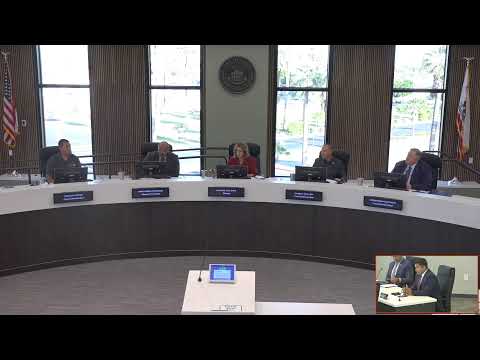
The Indio City Council unanimously introduced Ordinance No. 1832, the "City of Indio Electrical Infrastructure Adequacy and Development Standards Ordinance," and approved Resolution No. 10560 establishing related fees after a public hearing and extended staff presentation.
City Manager Brian Montgomery and the city attorney told the council the ordinance is designed to address limited electrical capacity in the city by creating an option-driven approach: developers may build necessary substation capacity themselves or pay a voluntary in-lieu fee that the city can direct into a planned program for centralized substation construction. The city attorney said the approach balances reliability, redundancy and economic vitality while avoiding double charges for developers. "Do you want to build the infrastructure that is needed to support what you are building, or would you rather pay an in lieu fee to the city that can be used as part of a centralized and planned process," the city attorney explained.
Council and members of the development community pressed for detail on how the fee and reimbursements would work. One developer representative said the per-unit cost estimate for certain projects could be significantly higher than typical impact-fee ranges elsewhere and asked the council to consider deferrals, payment at completion, or waivers for affordable housing. City staff responded that the ordinance includes authority to consider council-approved deferrals or development agreements, and that reimbursement mechanisms would be defined in project agreements so developers who build capacity could be repaid if others later tie into that capacity.
Staff noted the fee is intended to fill the gap remaining after other revenue (including a proposed surcharge and bond funding) is applied to a set of four substations the city is financing; the city manager said that program should cover those four subsations for roughly 10–15 years under current projections. The city attorney also emphasized the ordinance's anti-duplication language to prevent double-charging a developer under existing programs.
Councilmember Ortiz asked why the per-unit figure would be larger than the industry typical of $40,000–$50,000 per unit; staff said the difference reflects additional IID (utility) connection costs and the distance of some projects from existing capacity. City staff gave an example that a typical 100 KVA commercial connection could cost about $24,000 to connect, but projects farther from existing infrastructure could face substantially higher connection and distribution costs.
Mayor Pro Tem Fuhrman moved to introduce the ordinance; the motion was seconded by Councilmember Glenn Miller and passed unanimously. The ordinance was introduced on first reading; the ordinance and associated fee resolution will return for subsequent actions required by the municipal code before final adoption.
Next steps: staff will finalize fee schedules and project-agreement templates, return to council for any requested deferral or development-agreement approvals, and prepare later readings of the ordinance for formal adoption.