Get Full Government Meeting Transcripts, Videos, & Alerts Forever!
Get email alerts on the Operating Agency topic
No spam. Unsubscribe anytime.
Experts outline pros and cons of housing Urbana’s community responder program under police, fire, health or nonprofit
Summary
Speakers described tradeoffs: police‑embedded programs can ramp up quickly but face background‑check and trust issues; health or fire departments and nonprofits offer alternative grant eligibility, benefits and community trust tradeoffs.
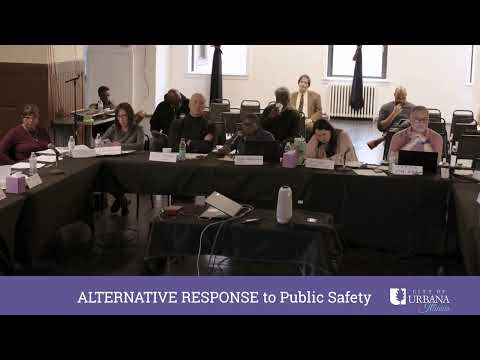
Urbana’s task force spent substantial time weighing which agency should operate a community responder program, hearing contrasting lessons from two practitioners who helped stand up response teams in other cities.
Anne Larson, formerly with Olympia’s crisis response unit and now at the NYU Policing Project, described Olympia’s path of contracting with a nonprofit at startup and later making responders city employees under the police department. "We did contract with an external behavioral health organization for about the first year and a half, and then we transitioned everyone over to city employees," Larson said, noting advantages — access to candidates and quicker startup — and disadvantages, including limits imposed by police radio and CJIS requirements.
Larson said city employment brought higher pay, benefits and permanence: "Becoming a city employee is something that people really lock into… they have amazing benefits, higher pay, job security." She also warned that being on police radio and CJIS certification can exclude candidates and constrain program flexibility.
Raven Lozada urged caution about locating programs inside police departments if community trust is a priority. Lozada said health departments and fire departments can be strong homes for alternative response because they may be eligible for different grant sources and can avoid some community trust barriers. She also noted procurement, hiring timelines and grant eligibility differ by host agency and can shape program design and staff pay.
Both guests recommended careful attention to supervision and accountability in contracting: if a nonprofit is contracted, the task force should specify who supervises staff and who directs operations. Larson recounted that Olympia’s RFP evaluation included police, fire and community providers to assess proposals across perspectives.
Task force members asked about local constraints and funding. The discussion did not produce a final decision about where Urbana’s program should live; Leap will incorporate operational options into preliminary recommendations for the task force’s next meeting.