Lifetime Citizen Portal Access — AI Briefings, Alerts & Unlimited Follows
Williams County tables 1-mile turbine setback after public outcry; forms committee to rewrite language
Loading...
Summary
After weeks of public comment urging larger setbacks and a moratorium, Williams County commissioners tied on a motion to adopt a 1-mile wind-turbine setback and voted to table the ordinance change while forming a committee to refine definitions and processes.
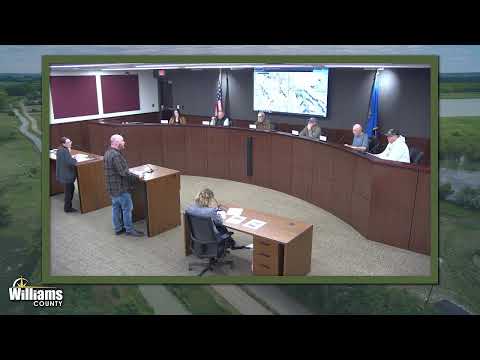
The Williams County Board of County Commissioners on Tuesday declined to adopt a staff-proposed change that would raise the required setback for new wind-energy turbines from 1,400 feet to 1 mile, instead voting to table the amendment and ask staff to assemble a committee to refine the ordinance language.
The proposal, presented by planning staff as LUDash0021Dash26, would have applied only to future wind-energy facilities and not to three already-permitted projects. Staff described the amendment as an effort to increase the distance between turbines and existing structures. The board opened a public hearing that drew multiple residents urging a larger setback or a temporary moratorium.
Why it matters: Residents described visual, quality-of-life and health concerns that, they said, warrant tightening rules before any new permits are issued. Commissioners agreed the topic affects future land use, neighbors’ rights and the county’s ability to balance development and private-property interests.
Several residents urged a mile or a moratorium. “When the wind turbines are spinning … there is a thing called infrasound,” said Ryan Wade, a Good Luck Township resident, urging commissioners to investigate alleged health effects and offering to provide supporting materials. Others, including Michael Hord and Janice Arntzen, said they simply do not want turbines visible from their yards.
Commissioners debated how to write protections. Some argued the ordinance should treat occupied dwellings differently from abandoned or nonresidential structures; others said a universal mile setback would functionally amount to a moratorium. One commissioner argued the process should place the burden on applicants who want turbines closer to homes: “I think the burden ought to be on the person that wants it closer,” a commissioner said during debate.
A roll-call vote on the staff recommendation resulted in a tie and the motion failed. The board then adopted a motion to table the item and form a committee to draft clearer language, including possible definitions for “occupied dwelling” and guidance on when variances should be allowed. Development Services Director Cameron Heimer told the board that any committee including two or more commissioners would be an open, advertised public meeting and that staff would prepare mapping and scenario options to inform the committee.
Next steps: Commissioners directed staff to convene the committee and report back; the board set its next regular meeting for May 21. The tabling leaves the current ordinance in effect for now; staff noted applicants may still file under existing rules but that staff will provide application requirements during the pre-application process.
Quotes drawn from the public hearing and commissioner discussion are taken directly from the meeting record. The ordinance referenced in the staff presentation was identified as Chapter 6-10-10.2 of the Williams County zoning ordinance and subdivision regulations (change proposed for future wind-energy facilities only).