Housing advocates urge eviction prevention as a first step; committee discusses tradeoffs
Loading...
Summary
Housing Works Austin urged the committee to treat eviction as a last resort and to pair prevention plans with case management, mediation and targeted funding. Council members pressed staff on administrative burdens and the fiscal tradeoffs for rental assistance and monitoring.
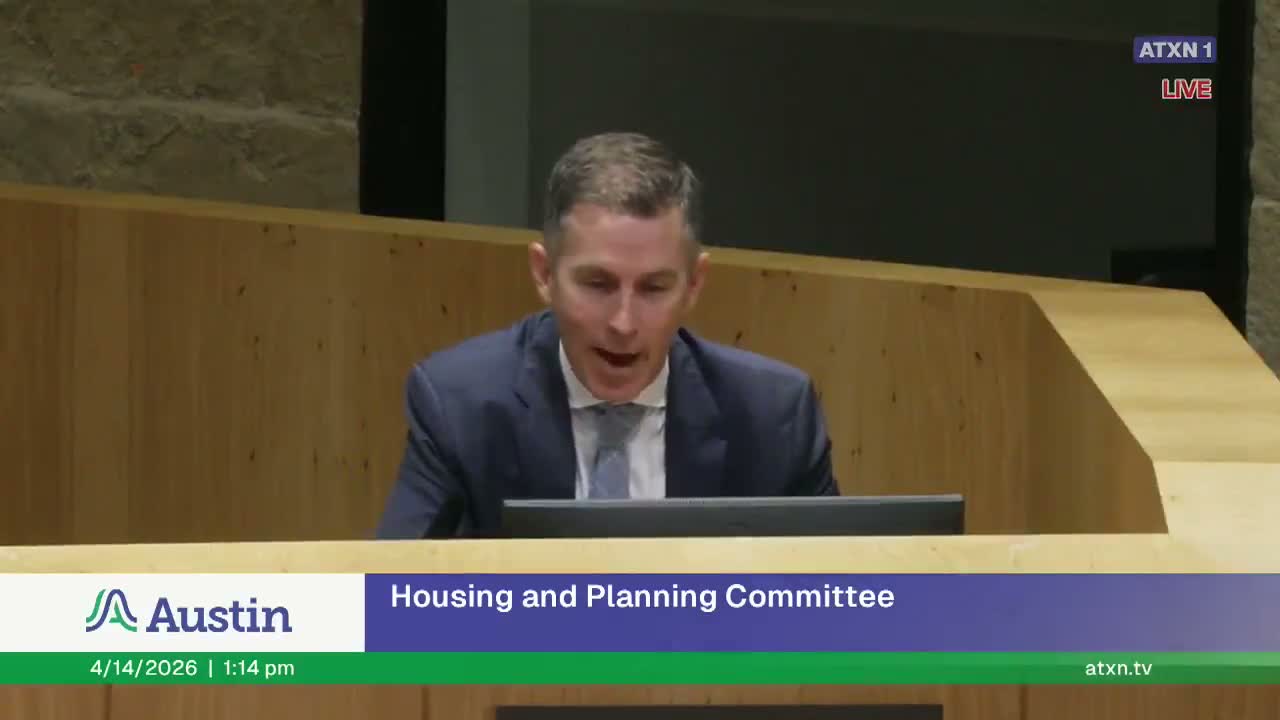
Vez Azar, executive director of Housing Works Austin, told the City of Austin Housing and Planning Committee on April 14 that eviction prevention programs should prioritize early intervention, tenant‑centered plans and partnerships with property managers to avoid needless filings. "Eviction is a last resort," Azar said, adding that prevention strategies often combine rental assistance, case management and mediation.
Azar distinguished eviction prevention (proactive practices implemented before any lawsuit) from eviction diversion (steps taken after a filing). She described best practices from Indiana and Chicago and highlighted Philadelphia's diversion model as an example of landlord‑tenant participation and program limits.
Why it matters: Committee members said preventing evictions can reduce downstream costs for courts, social services and schools and maintain neighborhood stability. Azar argued that early outreach by property managers and clear, simple eviction‑prevention plans reduce administrative burden on tenants and can improve housing outcomes.
Committee questions focused on who would carry administrative tasks and the long‑term economics for property managers. In response Azar said shared responsibility is essential: property managers should initiate outreach during early signs of nonpayment and programs should set clear timelines and appeal paths so tenants understand options. Azar also cautioned that rental assistance alone is insufficient without mediation and case management to ensure lasting stabilization.
The presentation reviewed several design considerations: tying incentive programs to affordable‑housing funding streams, capping eligible assistance amounts (examples discussed in other jurisdictions), building training for property managers, and evaluating program effectiveness regularly. Azar emphasized that many components require additional resources and coordination across city departments and community providers.
The committee did not take formal action on this item; staff and advocates said the briefing would inform future program design and stakeholder engagement.