Get Full Government Meeting Transcripts, Videos, & Alerts Forever!
Get email alerts on the Automated Traffic Enforcement topic
No spam. Unsubscribe anytime.
Committee refers automated traffic‑enforcement ordinance to full council after data, equity and privacy briefing
Summary
Committee on Planning, Zoning and Housing voted to forward a proposed ordinance enabling automated traffic enforcement to the full council with a neutral recommendation after traffic staff outlined data‑driven siting rules, privacy limits and state review requirements.
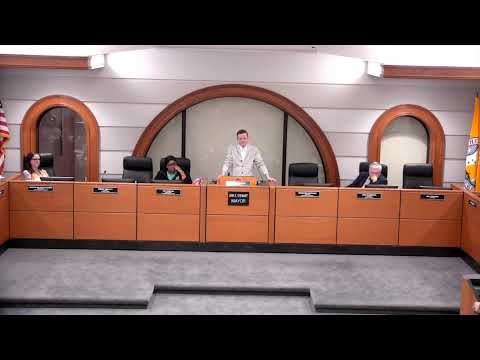
The Committee on Planning, Zoning and Housing on June 3 referred an ordinance that would allow New Britain City to pursue automated traffic enforcement safety devices to the full Common Council with a neutral recommendation, after a two‑hour presentation by city traffic staff and a lengthy question‑and‑answer session.
Traffic operations staffers told the committee the item is the first of several required approvals. The ordinance would align local rules with the state law that authorizes automated traffic enforcement; if the council and the city later approve a safety action plan and vendor, the city must then submit specific locations and supporting crash data to the Office of State Traffic Administration for final approval. Staff emphasized the process is multi‑step and that no cameras will be installed until the council, the public‑hearing process and the state review are complete.
"The goal is to change driver behavior, not to make it a revenue generator," said the traffic engineer leading the technical presentation, describing a preferred 30‑day warning period when a camera goes live and staffing rules that require a municipal employee or sworn officer to review each potential citation. The traffic operations manager added that the city views the technology as "cost neutral" when run under typical vendor agreements and limited to program costs or safety projects.
Staff reviewed key operational details that would be required under statute and in the city's draft ordinance: rear‑facing camera images so people are not identifiable in photos, a minimum speeding threshold of 10 mph over the limit that municipalities may raise, a first‑offense maximum fine of $50 and $75 for repeat offenses, an optional processing fee of up to $15, and owner‑based citations (the vehicle owner receives the notice). Staff said all personal data captured must be deleted after 30 days and cannot be repurposed for law enforcement license‑plate‑reader uses.
Equity protections were a central focus of committee discussion. Presenters said New Britain has 15 qualified census tracts and state rules limit camera concentration: generally no more than two cameras in larger tracts and only one in tracts smaller than a quarter‑mile. The Office of State Traffic Administration will review any city plan and may reject or request changes to avoid over‑concentration in particular neighborhoods. "OSTA will look at distribution and can reject plans that don't meet the criteria," the traffic engineer said.
Staff described the Vision 0 safety action plan that informed the proposal, which examined five years of local crash data to identify high‑risk intersections and corridors and to prioritize vulnerable users, including pedestrians and cyclists. Presenters said the Vision 0 community survey produced over 500 responses, which staff consider a meaningful sample for planning, and that school zones were used as an initial, defined dataset while the city develops a full plan for the whole municipality.
Committee members pressed staff on several items, including how citations are reviewed and who within the municipal organization would perform that review, how school zones and crossing guards factor into site selection, and how hit‑and‑run and low‑damage crashes are captured in state crash repositories. Staff said police division review is a likely option for in‑house adjudication and that crash‑reporting thresholds and reporting practices affect data availability.
After discussion the committee voted unanimously to refer the ordinance and related materials to the full council with a neutral recommendation, advancing the municipal review stage but not authorizing any camera installations. Next steps, as described by staff, include finalizing the safety action plan, interviewing and selecting a vendor to assist with location selection and data preparation, holding required public hearings, and submitting a detailed application to OSTA for site approval. If OSTA approves sites, the council would then consider any final local approvals required for implementation.