Get Full Government Meeting Transcripts, Videos, & Alerts Forever!
Get email alerts on the Wage And Hour Compliance topic
No spam. Unsubscribe anytime.
Employer witnesses tell Congress AI can improve wage-and-hour compliance for small businesses
Summary
Industry witnesses told the House subcommittee that AI tools can assist employers with classification, timekeeping, payroll and scheduling to reduce errors and help small and midsize firms comply with wage-and-hour laws.
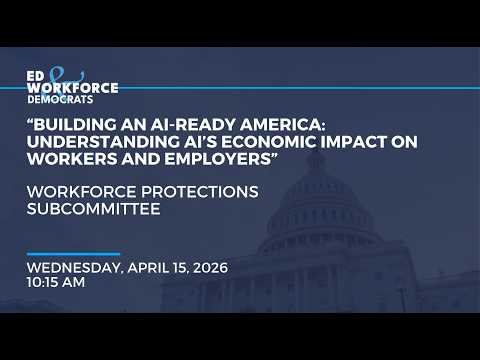
At a House Education and Workforce subcommittee hearing, Matthew Paul Gizzo, a shareholder at Ogletree Deakins, testified that artificial intelligence ‘‘is a powerful tool for good when it comes to wage and hour compliance’’ and described several practical applications for employers.
Gizzo told the panel that AI can assist with preliminary classification analyses (e.g., determining whether a worker is an independent contractor or fits an overtime exemption), improve timekeeping accuracy, automatically calculate complex pay rules across jurisdictions, and help employers avoid violations such as split-shift or spread-of-hours pay miscalculations. He said these tools can be particularly valuable to small and medium-sized businesses that lack in-house HR or legal resources.
Chatrain Birbal of the CHRO Association echoed that view, saying member companies use AI to ‘‘boost productivity, streamline routine tasks’’ and that the best use of AI is to ‘‘augment human judgment, not replace it.’’ Both witnesses urged a ‘‘careful and measured’’ federal approach that clarifies how existing wage-and-hour laws apply to AI-assisted systems rather than imposing rigid new federal mandates that could stifle adoption.
Members raised concerns about a patchwork of state and local requirements and asked whether federal consistency would encourage innovation and reduce compliance burdens. The hearing did not result in legislative action; members requested follow-up questions and additional written material.