Consultants propose $1.59 million energy-efficiency package for county buildings, with $2.7 million in capital improvements
Loading...
Summary
Chrissy McClure and technical leads outlined an energy-savings performance contract covering LED lighting, panel upgrades, building-envelope sealing, HVAC replacements and court security; consultants said the $2.7 million of improvements can be financed to a $1.59 million project cost with guaranteed 20-year savings and will be presented for approval next month.
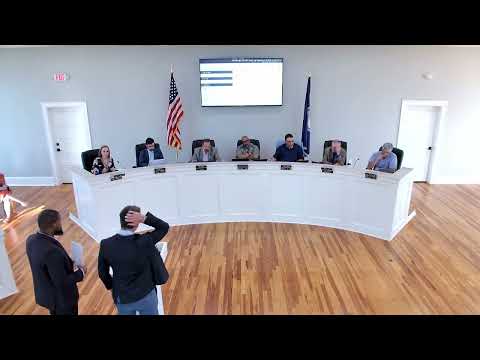
At the April 14 Essex County work session, Chrissy McClure presented an energy-efficiency and capital-improvement plan developed with county staff, describing a bundled project that would upgrade lighting, electrical panels, building envelopes, HVAC systems and select security and window work across county facilities.
"Tonight, we're here to review the energy efficiency and capital improvement program developed in partnership together," Chrissy McClure said, outlining goals, progress to date and what the team would seek approval to finalize next month.
Consultant Mike Rokowski detailed the electrical scope: LED lighting retrofits across most county buildings (excluding a small pool building where conditioned space is minimal), panel-board replacements to remove obsolete breakers and consolidate services where possible, and fire-alarm upgrades for the County Administration and Circuit Court buildings to meet current NFPA code. Rokowski noted a specific cost-saving measure at the Treasurer and Commissioner building: combining two meter services into one would eliminate a duplicate utility meter fee.
Building-envelope work will focus on air sealing cracks and improving weather stripping to reduce infiltration. Rokowski said consultants use high-quality polyurethane foam and long-lived door seals and aim to provide a 20-year energy-savings guarantee on project performance.
Doug Boswell described mechanical recommendations for the Circuit Court and District Court/sheriffs office. For the Circuit Court he proposed a variable-refrigerant-flow (VRF) system to allow simultaneous heating and cooling, removal of in-pit condensers and replacement of aging courtroom split-system units. For the district court/sheriffs office he recommended replacing aging air-handling units and converting an oil-fired boiler to a more efficient propane-fired boiler tied to on-site propane tanks.
On security, McClure previewed circuit-court upgrades including audio/visual intercoms, badge-access controls, window improvements at a clerks station, monitoring and remote-access control on specific doors. She said those security items have a capital component that can be bundled with the energy scopes to reduce sticker shock.
Consultants summarized cost and funding: they showed roughly $2.7 million in total capital improvements, and said the financed project cost after leveraging guaranteed savings would be approximately $1.59 million. McClure said funding options include grants, utility rebates, a tax-exempt municipal lease, bonds and possibly a solar power-purchase arrangement; she added grants would be treated as reimbursements back into the county general fund if awarded.
Board members asked operational and procurement questions. A supervisor asked whether maintenance agreements were included; Rokowski said maintenance contracts were not included in the project pricing and would be a separate ongoing cost the county should estimate. Supervisors also pressed the presenters to maximize use of local labor and suppliers; consultants said they would work with local vendors where practical and are coordinating technical details with the countys current suppliers (for example, the propane vendor).
On timing, consultants said lighting and building-envelope work could begin soon after approval (they anticipated summer 2026 for immediate scopes) while HVAC and specialized equipment could face longer lead times (10—16 weeks), pushing some work into the next budget cycle.
What happens next: presenters said they plan to return in May with final pricing and contract documents for board consideration and recommended phasing that minimizes disruption to court operations and other occupants.