Get Full Government Meeting Transcripts, Videos, & Alerts Forever!
Get email alerts on the Gender Based Violence topic
No spam. Unsubscribe anytime.
UNFPA representative: Women and girls in Sudan face widespread danger as funding lags hamper services
Summary
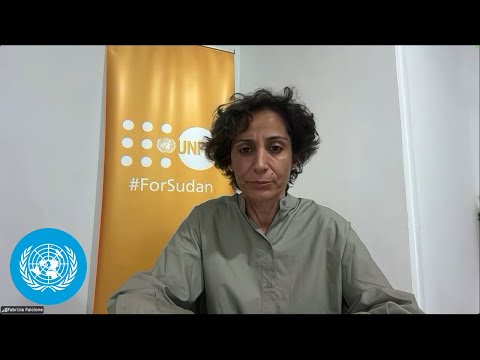
Fabrizia Farcione, UNFPA country representative in Sudan, told a UN Correspondents Association briefing that women and girls across Sudan face pervasive gender-based violence and insecurity — with 76% of women aged 25–49 reporting they feel unsafe — while protection and health funding remain far below needs.
Fabrizia Farcione, UNFPA's country representative in Sudan, told a United Nations Correspondents Association briefing from Khartoum that women and girls across the country face persistent danger and widespread gender-based violence as they flee fighting and live in displacement camps.
"Here, women and girls across Sudan are telling a consistent story of continued experience of danger and risks," Farcione said, citing a UNFPA assessment of 95 focus group discussions across 16 of 18 states comprising about 1,000 women and girls.
The assessment, Farcione said, found 76 percent of women aged 25 to 49 reported feeling unsafe in displacement camps and in public spaces such as markets, water points and roads. She described practical risks that compound that fear: lack of lighting at night, overcrowded shelters, multiple displacements and limited access to health services.
The briefing underscored gaps between needs and funding. Farcione said the protection sector in Sudan is funded at 14 percent and the health sector at 11 percent of assessed requirements, and warned that sustaining services is difficult because of those financing shortfalls. "We are running 88 women and girls safe spaces across Sudan," she said, adding that those spaces give some survivors a place to speak about violence and seek help.
Farcionesaid reporting of gender-based violence remains extremely difficult because of stigma, fear of retaliation, financial constraints and distance to services. She said three-quarters of women asked in the assessment identified economic empowerment and livelihood opportunities as their top priority and that many women want access to basic services, health care and schools rather than only food distributions. "They don't want to be fed. They want opportunities," she said.
In a question-and-answer session, Edith Lederer of the Associated Press asked whether the Sudanese government or the Rapid Support Forces had taken responsibility for sexual violence, and whether anyone had been prosecuted. Farcione replied that accountability and prosecutions fall outside UNFPA's mandate and that she would leave detailed answers to colleagues working on justice and accountability; she said UNFPA works with other actors on conflict-related sexual and gender-based violence.
Reporters also raised food insecurity. Namo Abdulao of Rudao Media Network referred to a World Food Programme map showing roughly 41 percent of the population in severe or crisis food insecurity and asked for on-the-ground examples. Farcione described seeing visible malnutrition and people who had walked for days to reach displacement sites, saying families and children sometimes go without food and water for days.
The briefing did not include new funding announcements or formal commitments. The session closed with thanks to UNFPA staff operating under difficult conditions in Khartoum.
Next steps: journalists at the briefing pressed for accountability information from agencies with investigative or legal mandates; UNFPA said it would continue to provide services and coordinate with other humanitarian and protection actors.