Redevelopment commission review: annual TIF report, abatement effects and deadline for June 15 letters
Loading...
Summary
The Daviess County Redevelopment Commission heard an annual TIF report from consultant Jason Simler (Baker Tilly) outlining the GPC and Westgate TIF areas, noted the GPC area expires 01/27/2027, discussed a company equipment abatement and a required June 15 auditor letter to avoid an automatic 5% pass-through.
The Daviess County Redevelopment Commission on Wednesday reviewed its annual tax-increment financing report and discussed how recent abatements and legislation will affect tax increments and future tax rates.
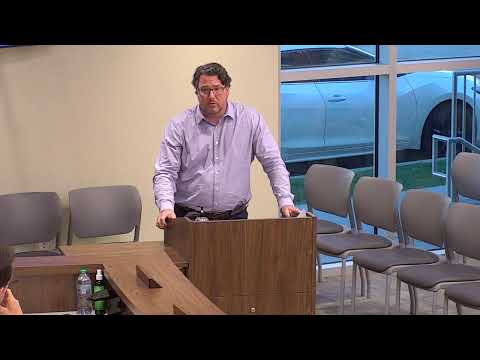
Jason Simler, principal at Baker Tilly, presented the report required by statute and told the commission the GPC TIF area expires on Jan. 27, 2027, with the final year of revenue capture to be paid in 2028. "You no longer have any bonds outstanding. You've paid all those off early, so congratulations on that," he said, noting that with expiration the captured assessed value will flow back into the general tax base and help reduce tax rates.
Simler reviewed 2025–26 assessments for real and personal property tied to the GPC area. He reported facility assessment for 2025 at about $24,992,000 and equipment assessment in the $71–72 million range, and he estimated roughly $410,000 from facility taxes and a combined tax increment near $1.4 million for 2026 before adjustments. He advised the commission to subtract a prior-year reimbursement of about $180,000 that the county agreed to pay the company for prior abatement savings; that reimbursement will be split across two settlements, reducing spring and fall distributions.
The presenter explained a previously granted 10-year equipment abatement that had not been properly applied for until this year. "They're getting about $11,900,000 of abatement. So the net assessed value is about $60,000,000," Simler said, and he described how the abatement reduces captured increment and thus near-term TIF receipts.
Using example schedules, Simler demonstrated that ending the GPC TIF next year would add roughly $87 million to the tax base and could lower tax rates in Washington Township from about $1.63 to $1.52 (an illustrative 11¢ reduction), while cautioning that distribution of benefits is uneven across districts. A commissioner argued the per-household effect is modest in cash terms — "that's 58¢ a day for every taxpayer" on a $3,000 tax bill in Simler's example — but may affect borrowing capacity for local school districts.
Simler also briefed commissioners about two legislative items: the county must submit a determination letter to the auditor by June 15 if it wants to retain 100% of assessed value in any TIF area; failing to submit the letter triggers an automatic 5% pass-through by the auditor. He added that residential TIF districts can now have a 25-year life (up from 20 years), a change relevant to housing-oriented projects.
The presentation included an overview of Westgate's TIF area (collections through January 2034, with the last payment in 2035) and the historical tax increment schedules for that area. Simler emphasized that while TIF funds can be used for public infrastructure and capital projects, using TIF for ongoing operating expenses (for example, police or fire payroll) is not recommended because the revenue is time-limited.
The commission asked clarifying questions about abatement timing, the interplay with minimum-exemption rules, and how ending the TIF would allocate benefits regionally. The presentation concluded with the commission agreeing to note the June 15 requirement and with no formal change to any TIF area at this meeting.
The commission's next steps include reviewing the June 15 pass-through determination and considering whether to reallocate remaining TIF balances for projects before the GPC area expires.