Get Full Government Meeting Transcripts, Videos, & Alerts Forever!
Get email alerts on the Convoy Sign topic
No spam. Unsubscribe anytime.
San Diego leaders, business group dedicate Convoy gateway sign and highlight neighborhood investment
Summary
City and county officials joined the Asian Business Association Foundation to light a new gateway sign in the Convoy District, praising local entrepreneurship and citing a $5 billion regional economic impact from AAPI-owned small businesses while the mayor also pushed for $4.8 billion more for city infrastructure over five years.
A new gateway sign in San Diego’s Convoy District was officially dedicated Monday evening, with city and county officials and the Asian Business Association Foundation calling the landmark a symbol of the neighborhood’s cultural and economic resurgence.
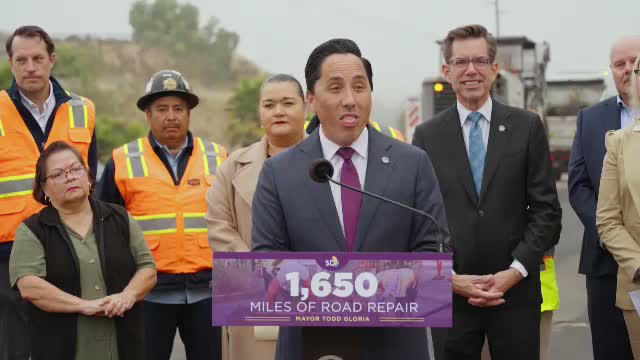
“Make us so proud,” Mayor Todd Gloria said as he thanked community leaders and city staff involved in the project. In opening remarks earlier in the program, Gloria framed the sign dedication alongside broader infrastructure priorities, saying the city had repaired 1,650 miles of roads in less than four years but that work remains incomplete. “This is not mission accomplished,” Gloria said, adding that “with an additional $4,800,000,000 in investment over the next five years, the city would be able to upgrade and modernize all of its infrastructure assets, including streets, according to our most recent five-year forecast.”
Jason Pagyo, identified in the program as president and CEO of the Asian Business Association Foundation, called the sign a culmination of years of collaboration and thanked corporate and philanthropic sponsors that helped fund the project. “This sign is more than just a landmark,” Pagyo said. “It’s a visible representation of our diverse and vibrant community.” He credited the transformation of Convoy from an industrial area into a destination for business, food and culture and cited the contribution of AAPI-owned small businesses to the regional economy.
Mayor Gloria said the sign fits into a larger community-plan update for Kearny Mesa and Convoy that anticipates new housing and parking changes intended to support the area’s growth. “As we think about the 2,000 new homes as well as the new parking districts that are gonna make it easier to get around Convoy, all of this is coming together,” he said, urging recognition of city planning, transportation and economic development staff who worked on the project.
County Supervisor Monica Montgomery Stepp, who said she represents District 4 and that Convoy is in her district, thanked the mayor and the Asian Business Association and noted that the county provided additional support for the sign. “When residents are proud of our communities, we invest in their well-being,” Montgomery Stepp said, describing the sign as a tool for cultural appreciation and cross-cultural learning.
Councilmember Kent Lee, introduced as a long-time ally of the Convoy community and a former board member of the Asian Business Association, thanked organizers and again emphasized the district’s economic role. Lee said the region’s AAPI-owned small businesses have shown a combined economic impact of about $5,000,000,000 across San Diego County and credited advocacy that supported the project’s realization.
Organizers and elected officials asked attendees to recognize a range of private-sector partners and philanthropic supporters listed by the foundation, including Friends House and a set of design, consulting and construction firms that contributed to the sign and its maintenance. The program also singled out city staff — including Lisa Lind, identified as a city planner who worked on the Kearny Mesa Community Plan update — for their role in steering the project.
The lighting ceremony closed with remarks from the speakers and a planned countdown to illuminate the sign. No formal votes or policy actions were reported at the event; remarks focused on celebration, neighborhood planning and appeals for continued infrastructure investment.