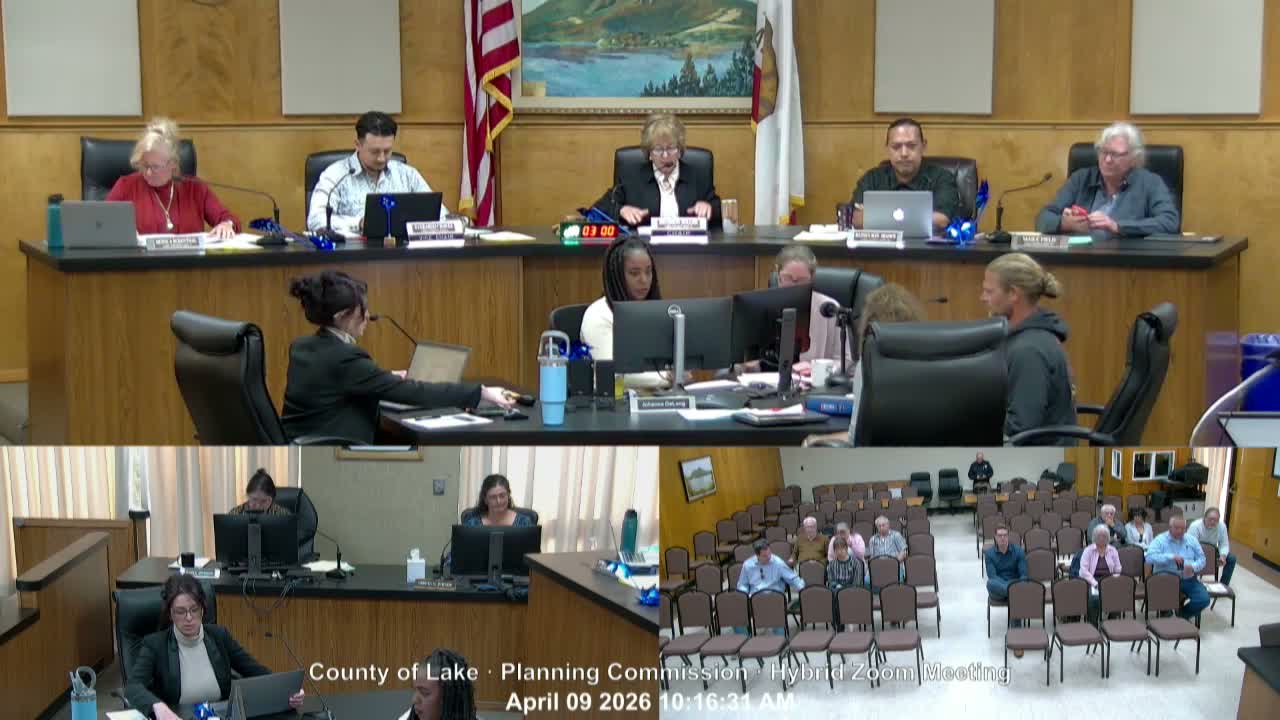
Planning Commission grants Osprey Farm cannabis permit after divided vote amid odor and access concerns
Loading...
Summary
The Planning Commission approved a major use permit and mitigated negative declaration for Osprey Farm (2.06 acres of outdoor canopy) by a 3-2 vote after hearing staff findings, consultant hydrology, and multiple neighbors'centered objections about odor, water and access.
The Lake County Planning Commission voted 3-2 on April 9 to approve a major use permit (PL-25-354) and adopt a mitigated negative declaration for Osprey Farm, a proposed 2.06-acre outdoor commercial cannabis cultivation operation near Kelseyville.
Staff recommendation and site: Senior Planner Mary (speaker 14) told the commission staff recommended approval, saying the proposed canopy is located outside the one-thousand-foot Farmland Protection Zone buffer, is sited in a pre-disturbed vineyard area and includes mitigation measures in a draft mitigated negative declaration. "Staff is recommending approval of major use permit PL-25-354 ... with the proposed conditions of approval and findings listed in staff's report," Mary said.
Applicant and technical studies: Applicant Al Fontana (speaker 3) described a regenerative organic approach and pledged neighbor outreach and on-site screening. Consultant Angie Dodd (speaker 15) presented hydrology and biological reports prepared under Lake County ordinance 3106, explaining the hydrology analysis used conservative canopy-based estimates and proposed monitoring measures including seasonal groundwater-level reporting and drought-triggered reductions in cultivated acreage.
Neighbors and fire safety concerns: Neighbors during public comment said the project would be too close to residences and could create persistent cannabis odor and safety impacts. "The introduction of a commercial cannabis cultivation operation in such close proximity to my home represents a significant and unwelcome change," one neighbor said. CAL FIRE urged clear 4290-compliant access and a fire-connection detail for the suppression tank, and staff amended conditions to require a 2.5-inch fire-district connector on suppression tanks.
Commissioner discussion and outcome: Commissioners questioned access routing (Boggs Lane vs Adobe Creek), greenhouse use (immature plants only), and monitoring provisions; staff confirmed workflows for encroachment permits and development-review triggers. After deliberations and added conditions for hydrology monitoring and fire connections, the commission adopted the mitigated negative declaration and approved the major use permit by recorded vote, noting a seven-calendar-day appeal period to the Board of Supervisors.
What remains next: The approval includes annual compliance monitoring and site visits; neighbors may appeal to the board within seven calendar days. Staff said tribal notification was sent under AB 52 and no tribe requested formal consultation; the project record includes tribal comments and required mitigation measures.
Sources: Staff presentation (Mary), applicant remarks (Al Fontana), consultant hydrology/biology report (Angie Dodd) and Commission action on April 9, 2026.