IRS CEO calls 2026 filing season 'most successful' as senators press on service, enforcement and data security
Loading...
Summary
At an April 15 Senate Finance Committee hearing, IRS CEO Mr. Bizzignano defended the agency's handling of the 2026 filing season, citing record refunds, high e‑filing rates and technology upgrades, while senators questioned the pause of the direct‑file program, staffing cuts and data‑sharing practices.
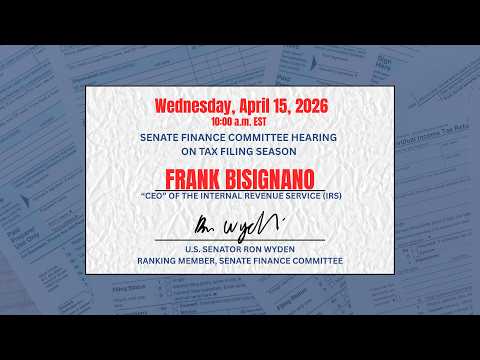
On April 15, the Senate Committee on Finance heard testimony from Internal Revenue Service Chief Executive Officer Mr. Bizzignano on the 2026 filing season, implementation of the Working Families Tax Cuts Act and the agency's efforts to modernize service and enforcement.
"This is the most successful filing season in IRS history," Mr. Bizzignano told the committee, citing agency figures that more than 134,000,000 individual returns had been received, over 80,000,000 refunds issued, a roughly 98% electronic‑filing rate and that more than 90% of taxpayers who filed electronically received refunds in less than 21 days. He said the average refund rose about 11% to more than $3,400 and that more than 53,000,000 taxpayers claimed deductions tied to the new law.
The CEO credited technology changes for much of the performance. "We moved online inquiries up 60% to more than 500,000,000, which reduced phone demand," Mr. Bizzignano said, adding that improved data systems and weekly management reviews allowed faster processing and targeted outreach.
Why it matters: senators on both sides said the numbers demonstrate real consequences for families and businesses, but several raised follow‑up concerns about access to assistance, the distributional effects of the tax law and how the agency balances automation with in‑person and phone service.
Direct file and free options: several senators, including Ranking Member Wyden, challenged the IRS decision to pause its direct‑file effort, arguing a government‑run free filing option is widely used abroad and would help low‑income filers. Mr. Bizzignano defended the pause, saying direct file had low uptake compared with existing free options and that the IRS had spent tens of millions building a duplicate product. He told the panel that roughly 2,000,000 taxpayers used the existing free‑file options this season and that private industry and VITA (Volunteer Income Tax Assistance) programs also serve millions.
Enforcement and the tax gap: multiple senators pressed the agency on staffing and the so‑called tax gap — the difference between taxes owed and taxes collected. Mr. Bizzignano said enforcement revenue is up about 12% year‑to‑date and pointed to data‑driven outreach (including hundreds of thousands of letters that yielded collections) and several high‑value cases. Senators urged clarity on what portion of the tax gap is "addressable" with current authority and resources, and asked for a plan tying technology and staffing to measurable results.
Data security and oversight: the hearing also covered data security and cross‑agency data sharing. Mr. Bizzignano told senators the agency has elevated risk management and brought in outside experts to validate protections, and he described weekly risk meetings and direct reporting lines for cybersecurity staff. He acknowledged ongoing inspector general reviews and litigation in some data‑sharing matters and said the IRS is cooperating with oversight.
What's next: senators asked for follow‑up written materials, including breakouts of the metrics Mr. Bizzignano cited, staffing figures, and details about enforcement results and the addressable tax gap. The committee deferred some detailed technical follow‑ups to staff briefings and left open the possibility of future hearings focused on AI, data systems and enforcement strategy.
The hearing concluded with Chairman Crapo thanking the CEO for the agency's work and the committee adjourning with several outstanding requests for documentation.