Get Full Government Meeting Transcripts, Videos, & Alerts Forever!
Get email alerts on the Parks And Recreation topic
No spam. Unsubscribe anytime.
City manager presents water‑feature, multipurpose options to replace Jay Littleton ballpark; council seeks more public input
Summary
City staff presented several replacement options for the Jay Littleton ballpark, from a full $28 million grandstand rebuild to lower‑cost multipurpose and a themed water‑feature concept; council received the report and several members asked to return the item after broader public review.
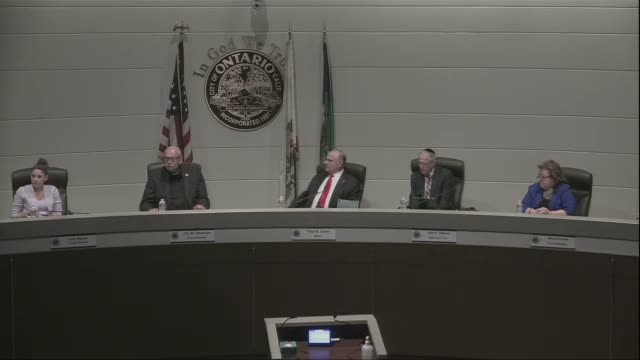
City Manager Scott urged the Ontario City Council to endorse a concept plan on Tuesday that would replace the burned Littleton grandstand with a multipurpose, baseball‑themed park centered on a large water feature and ancillary amenities.
Scott told the council the full restoration of the historic grandstand to current construction standards would likely "be in the neighborhood of $28,000,000," and would require structured parking if the facility were to hold roughly 3,500 seats, driving total project costs much higher. He contrasted that estimate with a lower‑cost multipurpose approach using surface artificial turf fields, which staff estimated could be "in less than $20,000,000, 20 to $23,000,000," and described the recommended option as a themed water feature with walking trails, a small grandstand‑like structure, and optional library annex space.
"The unfortunate burning of the ballpark does give us an opportunity to look at bringing additional amenities to the community," Scott said, urging the council to give staff direction so the city could develop program budgets and a project concept.
Gary Littleton, a family member and longtime local resident, told the council the loss of the grandstand had been painful and urged them to preserve the site’s legacy. "Building that park is not going to bring back the memories," he said, "but we're going to be able to create new memories by the success of building up park back." Littleton asked the council to keep Jay Littleton’s name and the site's traditions as part of any redevelopment.
Council discussion focused on balancing historical tribute, cost and neighborhood relevance. Councilmember Perrotta said the public had not had sufficient time to consider four different options and asked the council to postpone action so residents could review designs and return their preference. "I would be in favor of postponing this, bringing it back to the next city council meeting. Let the public come, let us know what they want," Perrotta said.
The mayor said he wanted to receive and file the report to allow staff to move forward with next steps, prompting a procedural exchange with the city attorney, who advised that typically the council would receive and file a staff presentation and could also give staff direction or request return of specific options. One council member asked for the item to be placed on the next agenda for a fuller public review; the mayor indicated the report was received and filed and the matter would be revisited, with the next meeting set for February 17.
Staff emphasized the project's cost sensitivity to the insurance settlement and noted Measure Q funds as one potential funding source. Scott said that fully restoring the grandstand would trigger significantly higher costs (including parking structure needs), while the water‑feature/multipurpose option would be less expensive and allow more neighborhood‑oriented amenities.
The council did not adopt a final design or authorize construction contracts at the meeting. Instead, it received the staff report and directed additional public engagement and a return to the council for further action.