Get Full Government Meeting Transcripts, Videos, & Alerts Forever!
Get email alerts on the Grants topic
No spam. Unsubscribe anytime.
Douglas County approves $2026 Natural and Cultural Heritage grant awards amid questions about eligibility and geographic equity
Summary
The Board approved the Heritage Conservation Council's 2026 awards after staff said the program received 42 applications requesting roughly $1,000,000. Commissioners pressed the Heritage Conservation Council on partial funding, for-profit applicants and geographic distribution; staff said partial awards are followed by scope negotiations.
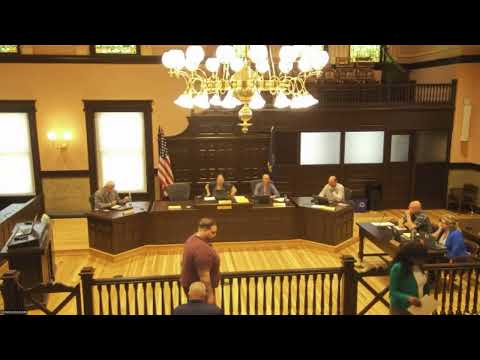
The Douglas County Commission voted unanimously April 15 to approve the Heritage Conservation Council's recommended slate of natural and cultural heritage grant awards for 2026.
Caitlin Amerlin, the county's heritage conservation coordinator, said this was the program's fifteenth year and the most competitive cycle to date: 42 applications requested just over $1,000,000, and the council added $40,000 in seed-grant funding to broaden awards. "We received 42 applications, or requests for funding. That is by far the highest single number of applications that we've received," Caitlin said.
Commissioners asked for more detail about how awarded county dollars leveraged other resources, distinguishing cash matches from in-kind volunteer contributions. Caitlin said the program collects cash-match, in-kind and volunteer-hour fields in applications and that the council scores "matching resources" without fully differentiating cash versus in-kind in public summaries. She also noted staff follow-up with partially funded applicants to adjust scope or pursue supplemental sources and that applicants may decline awards without penalty.
Several commissioners raised concerns about eligibility and equity: the presence of for-profit applicants (including university divisions), whether large entities like KU were unduly advantaged, and the geographic distribution of awards across smaller communities. Caitlin said the program is intentionally broad but that the council discussed geographic diversity and the administrative capacity differences across applicant types; she suggested staff could revise guidelines to clarify priorities and encourage indirect-cost inclusion up to 10 percent.
Public commenters highlighted historic-preservation needs in Lecompton and questioned whether some awards benefitted private groups without adequate public access. Caitlin said letters of support from named partner organizations were encouraged and that grant agreements can include accessibility or public-engagement requirements.
Commissioners directed staff and the Heritage Conservation Council to take up several process items for the coming cycle, including clearer guidance on for-profit eligibility, further reporting on leveraged match and outcomes, and earlier applicant feedback on partial awards. The commission then approved the HCC's recommendations.