Get Full Government Meeting Transcripts, Videos, & Alerts Forever!
Get email alerts on the Housing Moratorium topic
No spam. Unsubscribe anytime.
Euclid council sends group‑housing moratorium to third reading amid fair‑housing caution
Summary
Council debated Ordinance 107‑25, an emergency six‑month moratorium on new group housing facility applications and approvals. Administration urged more research on fair‑housing and building‑code issues; councilmembers agreed to delay a final vote and sent the ordinance to a third reading for further study.
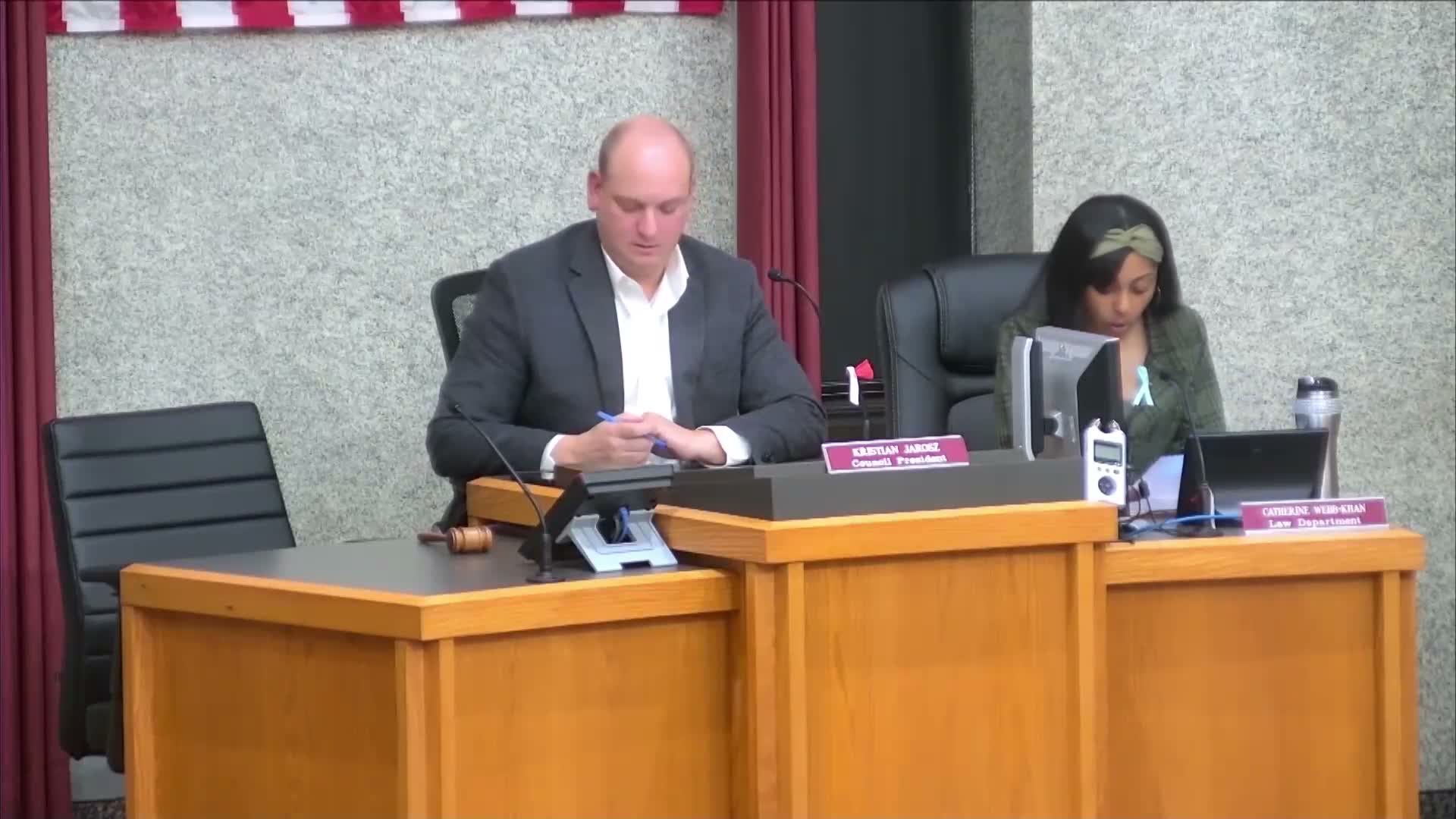
Council President opened debate on Ordinance 107‑25, an emergency measure that would bar the city from accepting applications or granting zoning approvals, building permits and certificates of occupancy for group housing facilities for up to six months while the city reviews its zoning code and related ordinances.
Law Director Cooney recommended delaying a final vote so the administration could consult municipal attorneys and professional organizations and bring the council up to date on legal risk. "We've been informed of other professional organizations that are addressing this issue," Cooney said, and "it would be helpful to hear some of the latest thoughts ... to be able to share with counsel." The administration reiterated that the city currently issues zoning approvals, building permits and certificates of occupancy for group homes and that those processes would be examined.
Council members raised recurring concerns about possible fair‑housing exposure if the city treats classes of residents differently. Councilwoman Steele warned against discriminatory outcomes: "We have to be careful ... We have to be careful of this legislation," she said, urging the council to get the policy right. Councilman Cosgrove asked whether the moratorium could expose the city to legal jeopardy from a fair‑housing standpoint.
Councilman Toulton asked whether zoning options short of a moratorium — for example zoning to require multi‑family design or bedroom limits — could be considered while staff gathers more information. Cooney said the administration is examining zoning alternatives alongside fairness and legal constraints.
After discussion, a motion to send the ordinance to a third reading passed; no final vote on adoption occurred. The council directed staff to continue outreach with legal counsel and relevant professional bodies before returning a revised proposal.
What happens next: Ordinance 107‑25 will return for a third reading and potential vote at a future meeting once the administration completes research and provides additional legal and zoning analysis.