Get Full Government Meeting Transcripts, Videos, & Alerts Forever!
Get email alerts on the Energy Electricity topic
No spam. Unsubscribe anytime.
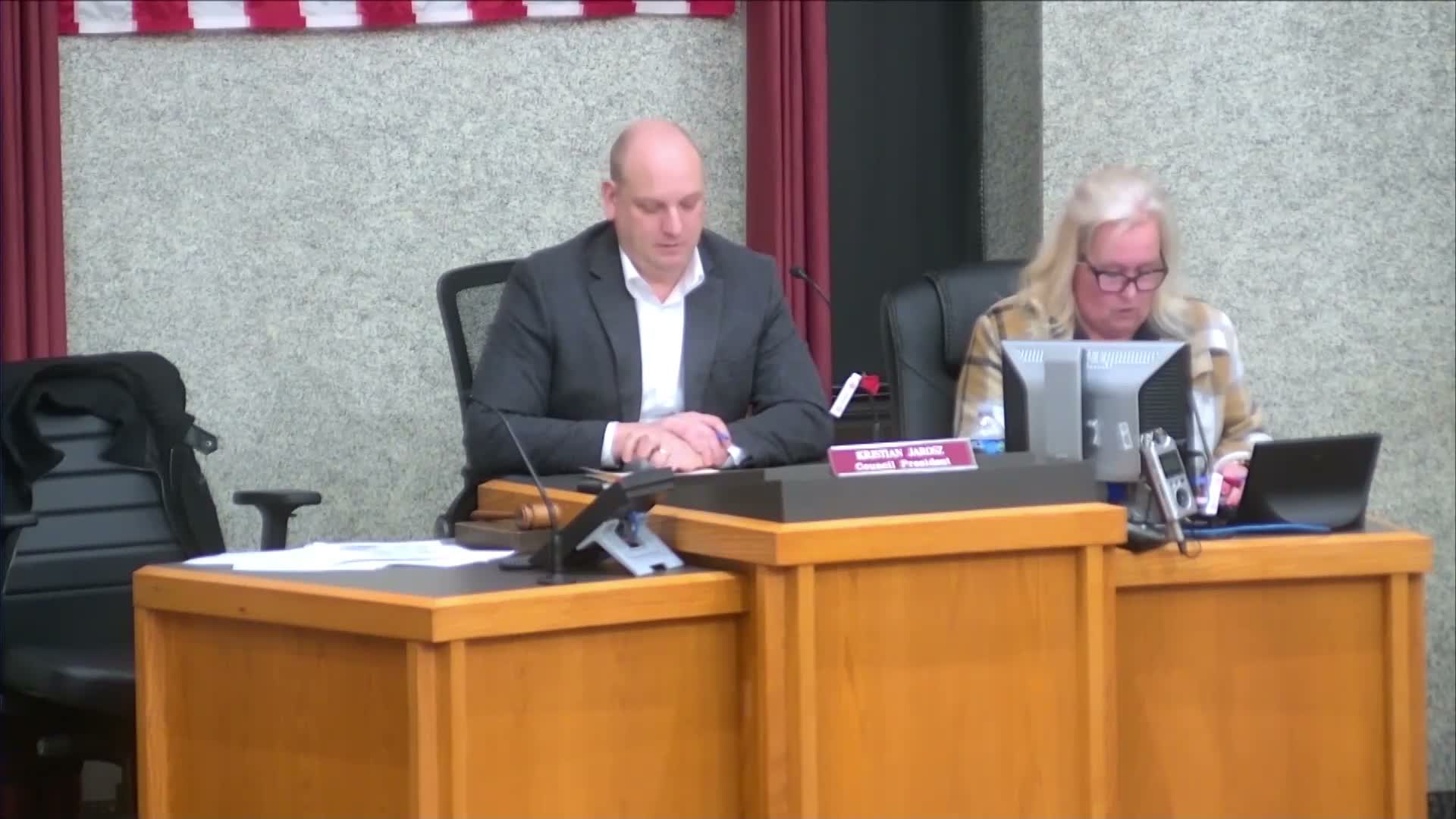
Euclid council renews electric aggregation agreement, approves 25‑month supply with DynaG Energy
Summary
The Euclid City Council on Feb. 17 approved an emergency ordinance continuing the city's opt‑out electric aggregation program and authorizing a 25‑month supply agreement with DynaG Energy; administration and its energy consultant said a longer term helps lock in stability as market prices rise.
The Euclid City Council on Feb. 17 unanimously approved an emergency ordinance authorizing the continuation of the city's governmental electric aggregation program and a 25‑month energy supply agreement with DynaG Energy.
The law director told the council the city's current one‑year supply agreement expires in May 2026 and that Independent Energy Consultants (IEC) recommended a 25‑month contract to provide price stability for residents and small businesses. John Burns of IEC testified that bids clustered near 9.9 cents per kilowatt hour and that a longer term helps prevent near‑term upward price movement: "We're trying to extend the rate as long as we can under 10¢," Burns said.
Why it matters: the aggregation program pools residential and small‑business load so the city can negotiate supply terms for participating customers who are automatically enrolled but may opt out. Council members pressed IEC on alternatives, including NOPEC and individual market offers, and IEC said those are different products and that aggregation has historically produced savings: the administration noted cumulative savings versus NOPEC and the utility dating back to 2018.
Details and procedure: the law director said letters will be mailed to eligible residents in March; residents then have 21 days to opt out, followed by a final 7‑day notice from the utility before any switch. IEC advised that the city's aggregation has no early‑termination fee in order to preserve residents' flexibility. The ordinance was read into the record and passed on the emergency vote.
Council questions focused on term length, market alternatives and consumer protections. John Burns answered technical questions about supplier appetite for aggregation risk and market behavior, saying that a 25‑month term was the consultant's recommended balance of price stability and market risk.
Next steps: administration will implement the notice process and send opt‑out letters to eligible residents; the law director and IEC will continue to monitor market conditions during the contract term.