Lifetime Citizen Portal Access — AI Briefings, Alerts & Unlimited Follows
Planning commission recommends denying proposal to allow 60,000‑sq‑ft neighborhood‑commercial buildings
Loading...
Summary
After a public presentation by the applicant and more than a dozen resident comments focused on traffic, safety and neighborhood character, the Saratoga Springs Planning Commission voted to forward a recommendation for denial of a proposed citywide amendment that would increase the maximum neighborhood commercial building footprint from 15,000 to 60,000 square feet.
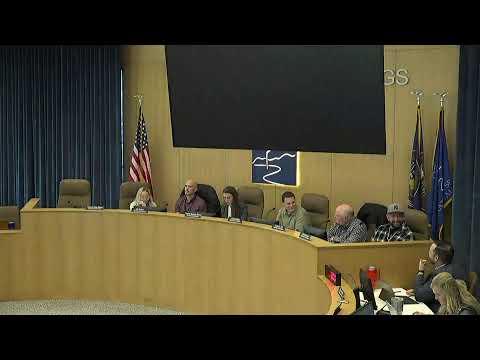
The Saratoga Springs Planning Commission on April 16 recommended that the City Council deny a proposed amendment to Title 19.04 that would raise the maximum building footprint allowed in the Neighborhood Commercial zone from 15,000 to 60,000 square feet.
Senior Planner Austin Roy told the commission the applicant is targeting parcels near 2000 South Ring Road and that a code change would apply citywide to all neighborhood commercial zones. Chris McCandless, representing the applicant and property owners and speaking for Beehive Academy, presented a two‑phase campus concept and argued the school would generate fewer weekly vehicle trips than a shopping plaza. “No left hand turns by the school or their student population,” McCandless said, describing a proposed ride‑in/ride‑out circulation to limit neighborhood impacts.
Residents who spoke at the public hearing urged denial. Mindy Green, a Jacobs Ranch resident, said the change would push traffic onto local collector streets and increase risks near homes and parks. “This school will bring people in from all over,” Green said, warning that parents from neighboring cities would use residential streets for drop‑off and pickup. June Rigby told the commission the applicant’s traffic comparisons were misleading and stressed that neighborhood commercial zoning is intended for low‑scale, walkable businesses. Several speakers cited fire and evacuation concerns, limited emergency access, and the risk that a future owner could build a different, more intensive use if a school did not materialize.
Several speakers supported the amendment or proposed a narrower approach. Sam Roberts, part owner of the central 7‑acre parcel, said the land could be developed under current zoning in ways residents would find less desirable and vouched for Beehive Academy. Kayla Crandall and other residents suggested an alternative: keep the 15,000‑sq‑ft citywide limit but add a narrowly crafted exception (an asterisk) that would allow larger footprints only for schools.
Commissioners repeatedly referenced the city’s general plan, which describes neighborhood commercial areas as intended for low‑scale uses that preserve neighborhood character. Several commissioners said they favored the school concept but were unwilling to support a citywide change that could alter four neighborhood commercial zones. Legal and staff input noted that a narrowly worded exception limited to schools could be discussed and would be procedurally allowable under the public hearing notice because it would be less expansive than the applicant’s request.
Commissioner Mann moved and Commissioner Hill seconded a motion that the commission forward a recommendation for denial of the proposed code amendment with the findings and conditions in the staff report. The commission voted in favor of forwarding the recommendation for denial. The item will now go to the City Council for final consideration.
The commission did not adopt an amendment or condition at this meeting; commissioners asked staff and legal to prepare clearer language and background materials before the Council sees the request. The council’s next steps and timing were not specified at the meeting.