Senate HHS finance committee reviews omnibus HHS budget draft and spreadsheet; markup set for next day
Loading...
Summary
Senate Health and Human Services Finance and Policy Committee members heard a section-by-section walkthrough of the HHS omnibus budget draft and spreadsheet comparing the governor’s and Senate proposals; no votes were taken and committee markup is scheduled for the following day.
The Minnesota Senate Health and Human Services Finance and Policy Committee heard an informational overview April 15 of the omnibus HHS budget draft and the accompanying spreadsheet comparing the governor’s proposals with the Senate’s positions. Fiscal analyst Mister Bessel told members the spreadsheet dated April 14 centers the governor’s proposals, with the Senate’s positions shown at the right, and noted key differences that drive cost changes between the two sets of proposals.
Bessel said the Senate is not picking up the governor’s change to retroactive Medicaid eligibility, which is a primary reason for the differences in spending totals. He described other major items: a financing-related section tied to HR1 that would require DHS and MMB consultation if provider tax resources exceed need; a proposal establishing a $1,000,000 home-equity ceiling for long-term-care eligibility determinations starting in 2028; and program-integrity proposals that the Senate intends to consider separately. Several technical and accounting corrections, hospital-directed-payment and IT adjustments, and transitions related to the recently formed Department of Children, Youth, and Families were also listed in the index.
Senate counsel provided a section-by-section read of Article 1 (Department of Health), highlighting a proposed fee schedule for the all-payer claims database, newborn screening fee exemptions, rural clinical training grants, and a provision on variances for submerged closed-loop heat exchanger well isolation distances (from SF 2638). Committee staff summarized Articles 2 and 3 as largely drawn from the governor’s DHS budget and a federal-compliance package implementing HR1 provisions (including six-month redeterminations for some MA enrollees, work and community engagement requirements subject to exceptions, and limits on certain coverage for noncitizens).
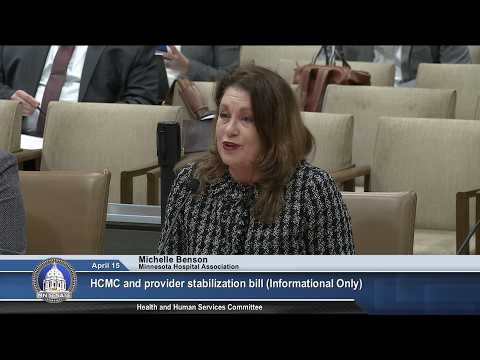
Members asked clarifying questions about totals, timelines and whether spreadsheet items reflect caucus priorities or formal targets. Chair said the spreadsheet reflected caucus and leadership priorities but that markup and amendment work would occur at the committee’s next meeting. The chair also gave an informational presentation on an additional draft proposal to stabilize hospitals, including targeted grants and reporting requirements; she said she would offer an amendment for markup the following day.
The committee took no votes; the chair said tomorrow would be reserved for member discussion, amendments and formal markup.