Get Full Government Meeting Transcripts, Videos, & Alerts Forever!
Get email alerts on the Audit Finance topic
No spam. Unsubscribe anytime.
Audit: Newberg SD receives clean opinion; auditors recommend strengthening controls
Summary
Polly Rogers auditors reported a clean (unmodified) FY2025 opinion for Newberg School District but identified several best‑practice recommendations — including Fidelity insurance coverage, governing‑body monitoring documentation, segregation‑of‑duties mitigation, completion of I‑9 forms, capital asset register review, and SBITA schedule corrections.
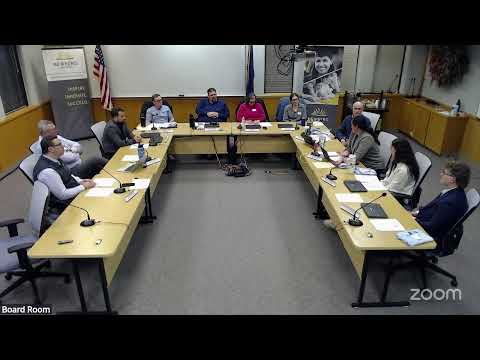
Polly Rogers’ lead auditor told the Newberg School District board April 14 that the district received an unmodified (clean) opinion on its FY2025 financial statements, while offering multiple recommendations to strengthen internal controls and documentation.
“We're happy to report that the district received a clean or unmodified opinion,” Nicole, the lead auditor, said during a presentation that summarized the audit’s three components: GAAP‑based financial reporting, Oregon minimum standards compliance, and federal‑grant testing. The auditors performed a single audit over the child‑nutrition cluster and reported no instances of noncompliance or questioned costs.
Audit findings listed for board attention included: ensuring Fidelity (employee‑honesty) insurance adequately covers cash and investments; formalizing governing‑body monitoring practices and recording them in minutes; mitigating segregation‑of‑duties weaknesses in a small business office; obtaining service organization control (SOC) reports or equivalent assurances from outsourced providers; completing and retaining federal I‑9 employment forms; maintaining a current capital asset register; and correcting a net present value calculation for a subscription‑based IT arrangement under GASB 96.
Auditors described many items as common to districts of this size and largely cautionary. When asked how common the findings were, Nicole said items such as Fidelity insurance and governing‑body monitoring are “very boilerplate” and intended as protective measures rather than indicators of misstatement. She confirmed that the district had no material compliance issues with federal grants tested in FY2025.
District staff responded with immediate remediation steps. Nate said the district has tightened system access to reduce segregation‑of‑duty exposure, updated I‑9 files, and provided cost estimates for additional Fidelity coverage (for example, roughly $3,300 per year for an additional $1 million of coverage). Auditors recommended that the board consider monitoring practices such as targeted questions to staff, documented review of financial statements, and benchmarks to support oversight.
Board members described the clean audit opinion as important to rebuilding community trust and committed to follow‑up on the recommended governance practices.