Bakersfield planners receive 2025 Housing Element annual report, staff say city remains behind RHNA target
Loading...
Summary
City planning staff presented Bakersfield's 2025 Housing Element Annual Progress Report, reporting 2,125 permits in 2025 and 12.7% of the sixth-cycle RHNA completed; commissioners voted to receive and file the report while routine consent items cleared the docket with one abstention.
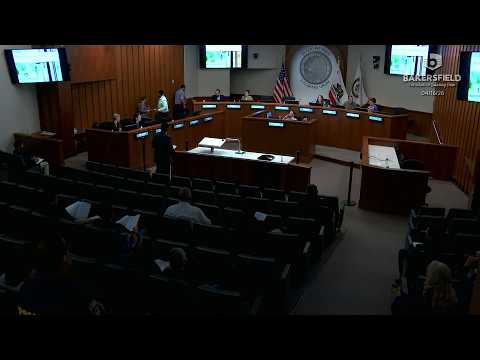
The City of Bakersfield Planning Commission on April 16 received a presentation on the 2025 Housing Element Annual Progress Report and voted to receive and file the document.
Associate Planner Luis Ramirez told commissioners the APR is a state-required tool that tracks how jurisdictions implement their housing element and must be submitted to the State Housing and Community Development Department (HCD) and the Office of Land Use and Climate Innovation (LCI) by April 1 each year. "The APR is a key tool required by the State of California that tracks a jurisdiction's progress in implementing its housing element," Ramirez said.
Ramirez said Bakersfield's sixth-cycle Regional Housing Needs Allocation (RHNA) covers 2024'032 and assigns the city 37,461 dwelling units across all income levels. He told the commission the city permitted 2,125 dwelling units in 2025 — an almost 20% increase from the previous year — including 43 units for extremely low-income households and 96 for very low-income households. "Overall, we've completed 12.7% of our RHNA target," Ramirez said, and added that to stay on track the city would need to permit roughly 5,449 units per year.
To meet RHNA goals, Ramirez summarized program actions and funding sources contained in the housing element. The element includes 109 program actions; the city has allocated general fund dollars to an Affordable Housing Trust Fund and is leveraging state and federal sources including ARPA and REIT funding to support affordable rental housing. Ramirez also noted land-use steps the city is pursuing, including zoning ordinance changes and land trust activity to acquire parcels for affordable development.
Ramirez highlighted recent and in-progress projects that contribute to affordable housing production: the Renaissance project (85 units, 42 for extremely low-income households), Haley Street Apartments (40 very low-income units), Let's Ring Senior Housing (150 senior units for households at 30—0% of AMI), Auburn Vista Apartments (60 units, with 25 targeted to low-income farmworkers), and CityView townhomes (37 units aimed at homeownership).
A commissioner asked Ramirez to briefly outline the strategies planned for the coming year; Ramirez replied the city is advancing zoning changes and using land trust tools, and that most program actions are in early stages since the housing element was certified five months earlier.
Procedural business: the commission approved routine consent calendar items by motion; one commissioner disclosed a conflict of interest and abstained from item 5d. The commission later moved to receive and file the APR; the motion was made by Vice Chair Cassie Biddle and seconded by another commissioner, and it passed with Chair Strickland absent.
What happens next: staff will continue implementation of the housing element programs and track progress in future APR cycles. The commission scheduled selection of chair and vice chair for the May 7 meeting. The meeting adjourned at 5:47 p.m.