Get Full Government Meeting Transcripts, Videos, & Alerts Forever!
Get email alerts on the Affordable Housing Design topic
No spam. Unsubscribe anytime.
Hugh Petter urges long-term master planning, walkability and tenure‑blind affordable housing for Charleston’s Project 3,500
Summary
At a Dock Street Theatre lecture, Hugh Petter of Adam Architecture shared lessons from the Duchy of Cornwall’s Nansleden master plan — including phased delivery, a 50‑year vision and pepper‑potted affordable housing — and urged Charleston to prioritize walkability and local apprenticeships.
Hugh Petter, a principal at Adam Architecture, told a Charleston audience that long-term master planning and walkable, mixed‑use neighborhoods are the most effective ways to expand affordable housing without sacrificing local character.
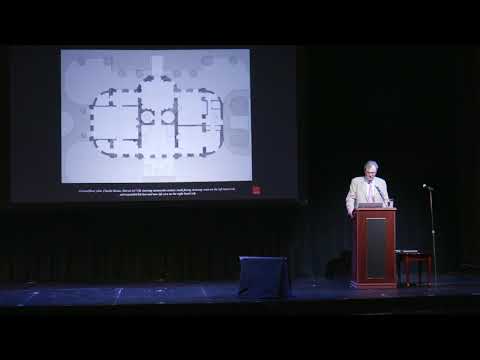
Petter, speaking at the Dock Street Theatre as part of a Project 3,500 public lecture series, outlined ADAM’s approach and showcased the Duchy of Cornwall’s Nansleden development as a test case. He said Nansleden’s long-term blueprint allowed phased delivery of large numbers of homes while protecting design quality and integrating community facilities.
“Everything is led by public consultation. It’s all controlled by the master plan,” Petter said, describing the project’s 50‑year horizon and the decision to sequence infrastructure and amenities so each phase fits into a coherent whole.
Why it matters: Charleston’s Project 3,500 is aiming to increase housing supply in a city constrained by historic neighborhoods and high housing values. Petter argued that design-led, long-range planning — not one-off, purely volume‑driven development — produces more socially integrated, resilient places and better long‑term returns.
Petter gave three practical design and delivery lessons he said are central to replicable affordable‑housing outcomes: integrate affordable units tenure‑blind and pepper‑potted across phases; control the public realm (street elevations and block edges) rather than prescribing every private detail; and sequence public‑realm features, utilities and trees early so streets do not need to be repeatedly excavated.
On affordability and scale, Petter said Nansleden is planned for about 4,000 homes, with roughly 30 percent designated as affordable and a gross development value he characterized as 1,500,000,000 sterling. He described the Duchy’s approach of locating affordable units in small clusters so “you’ve no idea when you walk down the street which house is which.”
Petter also presented economic data linking walkability to sales performance. Using the firm’s PlaceLogic analysis, he said fully walkable schemes score 10 on their metric and that “for every point on that 10 scale, the same house will sell for an average £20,000 more,” a correlation he used to argue that place-making investments can be financed by higher market values elsewhere in a phase.
On construction and materials, Petter emphasized working with local craftsmen and using local materials to keep embodied carbon low and to return value to the regional economy. He cited a “fabric‑first” approach and placing renewables where they’re not visually dominant from the public realm as ways his projects have exceeded the UK’s 2030 embodied‑carbon targets.
During audience questions, Petter said councils sometimes require large commuted sums (penalties) for nonstandard public‑realm treatments and recommended talking to officers early to find middle ground. On infrastructure sequencing he explained ADAM’s strategy to route utilities across block backs rather than down streets so trees and high‑quality surfacing can be retained.
Petter also described how the Duchy and ADAM invest in apprenticeships and local training — noting roughly 100 apprentices at one scheme — and said that local skills development both raises build quality and creates employment opportunities that help sustain long‑term place value.
The lecture concluded with a brief audience exchange about prioritizing local residents on housing lists and next steps for community engagement. Petter encouraged patient collaboration among landowners, developers and local authorities to deliver durable, walkable neighborhoods.