Get Full Government Meeting Transcripts, Videos, & Alerts Forever!
Get email alerts on the Environmental Health topic
No spam. Unsubscribe anytime.
Fremont County delays adoption of updated on-site wastewater rules after residents raise density and cost concerns
Summary
The board opened a public hearing on state-updated OWTS Regulation 43 but agreed to postpone final adoption to the April 28 meeting after contractors and a longtime environmental trainer raised concerns about acreage requirements, density and installation costs in rocky terrain.
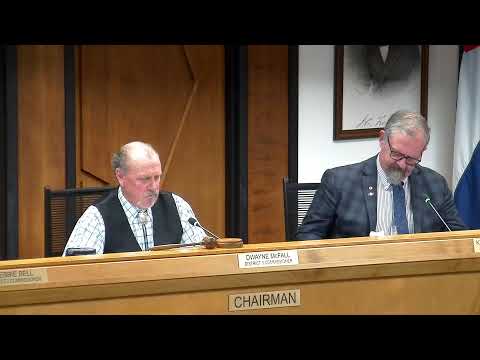
The Fremont County Board of Commissioners opened a public hearing on April 14 to consider revisions to the county’s on-site wastewater treatment system (OWTS) regulations intended to align local rules with Colorado Department of Public Health and Environment’s Regulation 43.
Wyatt Sanders, the county building official, summarized the state action and local deadline: “On 06/15/2025, the department adopted revisions to this regulation ... Local boards of health have until 06/15/2026 to adopt local regulations that are at least as stringent as regulation 43.” Sanders explained the revisions add criteria for high-rock-content soils and require secondary safety devices on new systems.
During public comment, environmental trainer Steve Harrison said municipalities and contractors remain concerned about density and minimum-acre requirements. Harrison said, “One of my concerns has been all along ... that you had to have an acre,” and described practical problems where small parcels are proposed to be split into multiple houses without adequate site separations or fire-flow infrastructure.
Sanders and county staff responded that elements of the county’s OWTS code already address lot-size and separation requirements, including exceptions for nonconforming parcels when auxiliary/replacement area is available. Commissioners discussed the balance between public-health protections and local control; one commissioner warned that some state changes can be perceived as stepping on local authority.
Given remaining questions and the opportunity to accept further written comments, the board voted to table the adoption, laying the item over to its April 28 meeting so staff can gather additional input and finalize the draft for resubmission to the state for final adoption.
The board did not adopt final regulations at the April 14 meeting; staff will collect additional public comments and return the item for further consideration on April 28.