Lifetime Citizen Portal Access — AI Briefings, Alerts & Unlimited Follows
San Luis project: health insurance costs could rise 9–15% as stop‑loss insurance and a few claimants drive increases
Loading...
Summary
A benefits consultant told the council the city's employee benefits budget is about $5.1M with medical/pharmacy accounting for roughly $4.6M; he projected a tentative 9–15% increase for medical costs driven primarily by stop‑loss (catastrophic) insurance and a handful of very high‑cost claimants.
A benefits consultant working with the City of San Luis presented an overview of the city’s employee benefits budget and the principal cost drivers for the coming fiscal year.
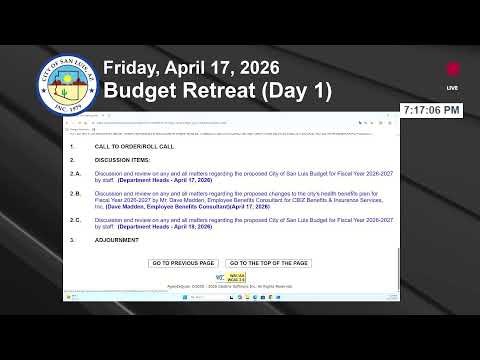
The consultant said the city’s employee benefits program is budgeted at about $5,100,000, of which approximately $4,600,000 is budgeted for the medical plan. He told council members the actuarial range for the medical/pharmacy plan points to a probable 9–15% increase in FY27, while cautioning the final rate depends on market underwriting that was still being finalized later in the month.
Explaining the cost drivers, the consultant said the city self‑funds its health plan and purchases stop‑loss (catastrophic) insurance to limit exposure. He reported that “a handful of people are driving the vast majority of costs,” noting that about four or five individuals account for nearly 50% of current plan costs and that one high‑cost claimant’s expenses approached $800,000 in recent data. The consultant highlighted that stop‑loss reinsurance pricing tied to these high‑cost claimants is responsible for much of the projected increase and estimated the stop‑loss component might add roughly $300,000–$400,000 to the budget.
The consultant said staff completed a procurement and recommended changing the third‑party administrator and network (a TPA using the Aetna PPO network). He said fixed administrative costs between the options were negligible and that the proposed administrator should provide a more stable long‑term experience for employees.
Council members asked whether employee contributions would increase; finance staff said they would recommend the employee benefits trust absorb the additional cost so both city and employee contributions would remain at current percentages, subject to the trust’s decision. A council member asked about provider coverage differences between Blue Cross Blue Shield and Aetna; the consultant said provider network analysis showed about a 98% match, with most differences among certain therapy or specialist providers.
Next steps: staff will finalize stop‑loss bids, present firm rates when available, and recommend funding decisions to the trust and council.