Get Full Government Meeting Transcripts, Videos, & Alerts Forever!
Get email alerts on the K 12 Education topic
No spam. Unsubscribe anytime.
Board spotlights Burrowood and White Oak elementaries as part of school-spotlight series
Summary
Principals from Burrowood and White Oak presented student-demographic data, tiered intervention programs and family-engagement strategies; trustees praised increased attendance and urged more math intervention staffing as a budget priority.
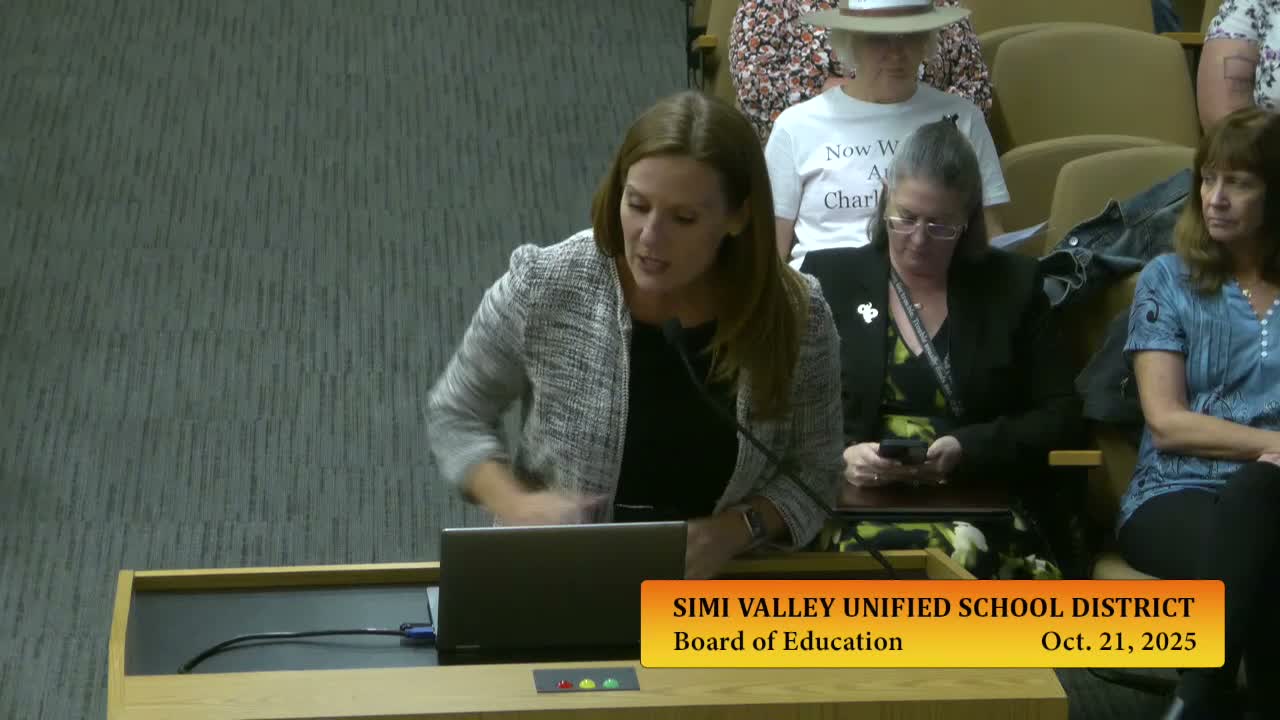
The Simi Valley Unified School District Board of Education on the evening’s meeting spotlighted two elementary schools, hearing presentations about academic supports, student engagement and family outreach.
Burrowood Elementary Principal Deborah Palmer told trustees Burrowood is a Title I school serving roughly 455 students, with about 81% of the student body identified as socioeconomically disadvantaged, 17% students with disabilities and roughly 52% multilingual learners. Literacy coach Audrey Fishelovich described schoolwide practices including daily morning meetings, a character-education program and targeted tiered interventions. Palmer said the school conducts three comprehensive literacy screenings a year, runs 4–6 week small-group interventions (averaging three students per teacher), and noted reclassification gains: "In 2023–24 we redesignated 29 students who demonstrated proficiency in English," she said, noting the school reclassified 36 students the previous year.
"Talent is universal; opportunity is not," Palmer said, summarizing the school’s approach to increasing attendance and instructional supports.
At White Oak Elementary, Principal Jen Culbertson and the campus PLC coach described a new house system—"4 packs"—meant to build belonging and increase student connectedness. Culbertson said the school enrolls about 355 students, with approximately 7% English learners, 43% socioeconomically disadvantaged and 9% students with disabilities. She highlighted a Tier-2 math intervention called Walk to Learn (four days a week, 30 minutes per session, six-week cycles), ongoing use of CAASPP and interim data to guide instruction, and schoolwide PBIS strategies tied to attendance and behavior.
Allison, White Oak’s PLC coach, described using diagnostic data and interim assessments to personalize intervention pathways and said she documented several hundred classroom visits last year to support teacher growth.
Trustees praised both presentations and asked questions about expanding intervention time for math. One trustee said the board would consider adding intervention teachers as a budget priority: "I'd be a proponent of figuring out a way to support you more, as a budget priority," a trustee said. The board noted the presentations’ recurring emphasis on trusted adults and student connectedness as a driver of academic improvement.
The board’s spotlight presentations conclude with trustees encouraging continued family engagement and promising to explore ways to expand targeted math support in future budgets.