Get Full Government Meeting Transcripts, Videos, & Alerts Forever!
Get email alerts on the Sunshine Procedure topic
No spam. Unsubscribe anytime.
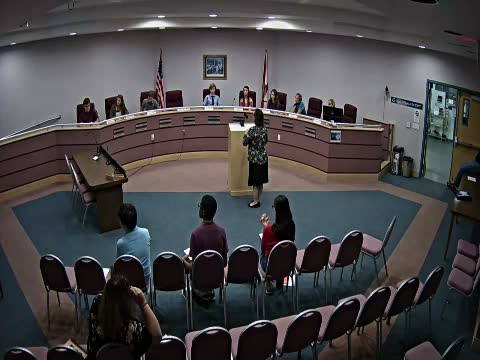
City clerk briefs youth council on parliamentary procedure, Sunshine Law and public-records rules
Summary
Webb Pierce, the city clerk, gave new youth council members a practical overview of Robert's Rules–style meeting procedure, the Florida Sunshine Law’s ban on off-agenda private communications about council business, and how emails and social-media posts can become public records.
Webb Pierce, the city clerk for Satellite Beach, told the newly sworn-in youth council that orderly meetings depend on basic parliamentary practices and compliance with Florida’s Sunshine Law. Pierce walked members through the sequence of motions — nomination, second, discussion, amendment and vote — and emphasized the chair’s role in preserving an orderly discussion.
Pierce reviewed specific sunshine-law constraints: meetings must be open to the public, reasonable notice should be provided (the city generally aims for 5–7 days), and members should avoid discussing council business outside properly noticed meetings. Pierce warned that communications related to items that may come before the council — including texts, emails and social-media exchanges — can trigger public-records obligations and, in certain cases, civil penalties if the sunshine rules are violated.
He also explained public-records basics: most work-product and communications about city business are public records, though personal notes intended only for private memory may not be. Pierce recommended members copy city staff on city-related emails so records reside on official servers and can be supplied in response to public-records requests.
The clerk offered members printed and electronic resources (a brief parliamentary-procedure primer and the board handbook) and encouraged councilmembers to consult staff with questions about the scope of permissible outside communications.