Get Full Government Meeting Transcripts, Videos, & Alerts Forever!
Get email alerts on the Public Safety Homelessness topic
No spam. Unsubscribe anytime.
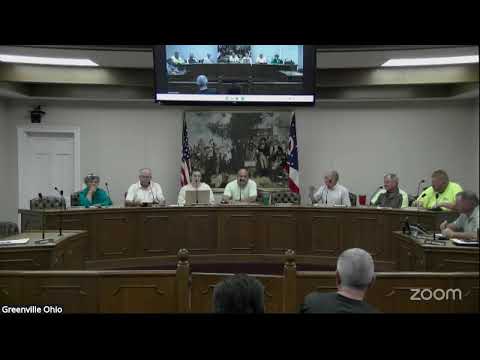
Business owners press Greenville City Council over downtown homelessness and safety; police outline limits and set multi-agency meeting
Summary
Business owners and residents told council that persistent encampments, public urination and aggressive behavior are driving customers away; Police Chief Benji described enforcement limits under city ordinance 6 80.02, urged reporting and scheduled a multi-agency meeting Friday to pursue housing and mental-health solutions.
Business owners and residents pressed the Greenville City Council on downtown sanitation and safety at a public hearing, saying people sleeping on benches and using electrical outlets have driven customers away and left storefronts feeling unsafe.
"We need to get it cleaned up," Paul Fellers told the council, identifying himself as a concerned resident and describing trash and people congregating near downtown businesses. Ken Stiefer, who said he lives at and works near 607 South Broadway, asked the council to "remove the bench, please" outside his business to reduce loitering and the perception of disorder. "Our customers are trying to pass through. They're not getting out of their way," he said.
Michelle Steepeau, who also works at 607 South Broadway, said customers had reported leaving downtown in fear after encountering people bathing at the splash pad and a man wearing a clown mask. "We were scared," she said, describing repeated incidents that she said have affected foot traffic.
Police Chief Benji responded that the city is addressing immediate incidents while pursuing longer-term solutions. He said the mayor and police have called a multi-agency meeting for Friday with community-action and mental-health partners to discuss housing options and services for people on the street. "We've cited people. We've taken people to jail for issues related to what's going on up there," he said, but added legal limitations to enforcement.
Chief Benji cited the city ordinance identified in the meeting as 6 80.02, which addresses encampments, and warned council that enforcement often requires the ability to offer a person a shelter or resource before clearing an encampment. "Homelessness itself is not unlawful," he said. "2018 Supreme Court ruled that... you cannot enforce camping in public as they call it." He urged residents to document incidents with photos, which the department can use in prosecutions or to present evidence to a judge.
Council members and staff discussed interim tactics including stepped-up foot patrols, use of ancillary charges (littering, disorderly conduct, menacing) when behavior meets criminal elements, disabling a downtown electric outlet used to power small appliances, clearer park-hour signage, and exploring bench redesign or removal to discourage sleeping.
Officials flagged capacity limits in shelter and service systems. The chief said a local church, Grace Resurrection Church, had doubled its monthly meal output (to roughly 600 meals per month), and the safety service director noted that short-term vouchers exist for one-night stays but that permanent housing waits can run six months to a year. Council members said they would try to coordinate resources and encourage people to enroll on housing wait lists.
Next steps: the chief and the mayor said they will convene outside agencies Friday (08:30, basement classroom at the City Building, per the meeting) to pursue resources and options; in the interim, residents were urged to call police for incidents and, when safe, to photograph evidence to aid enforcement.
The council did not take any ordinance or budget action on the issue during the meeting and scheduled follow-up discussions with community partners.